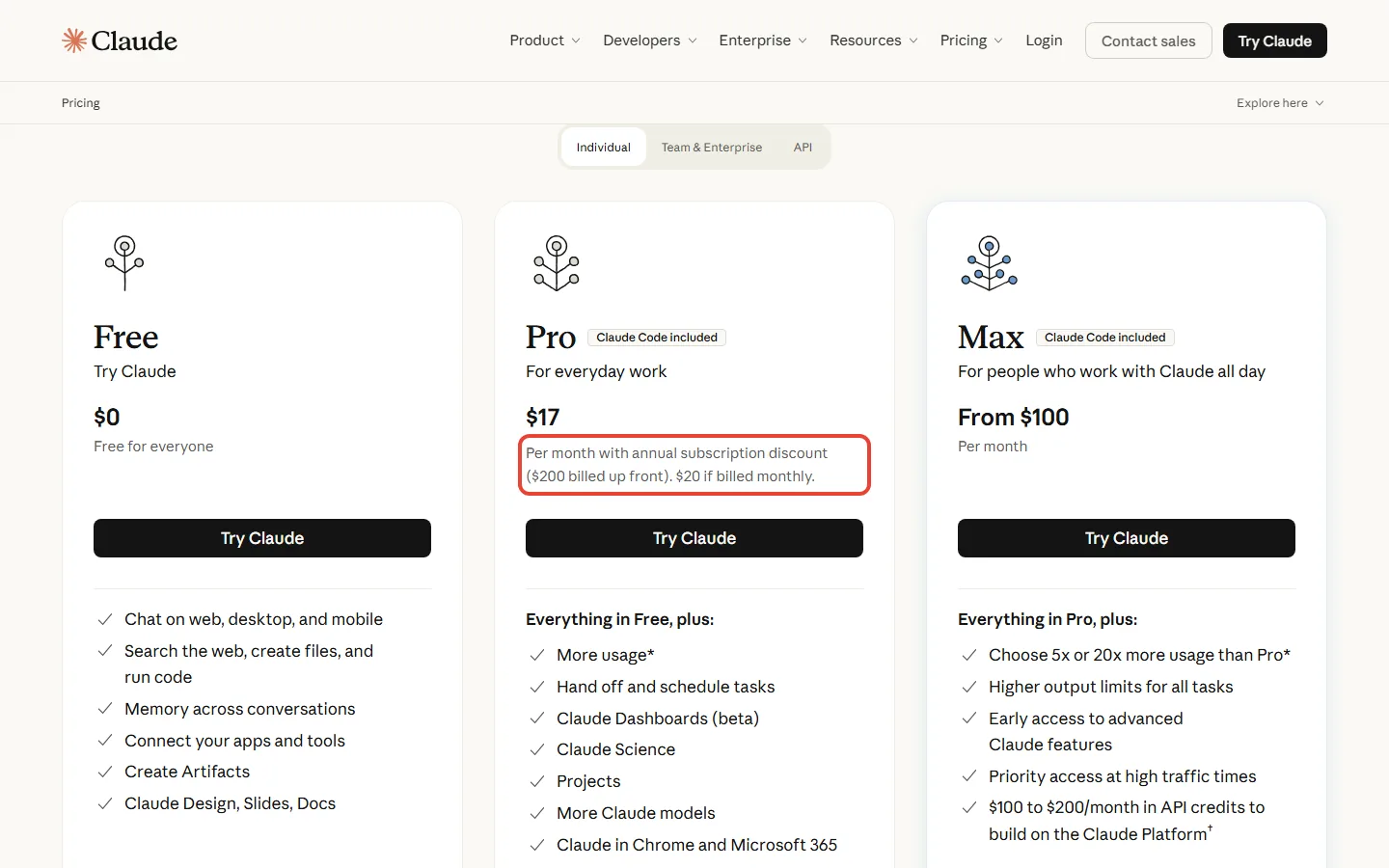
Is Claude Code free? No. Claude’s Free plan does not include it: Anthropic’s setup docs say Claude Code needs a Pro, Max, Team, Enterprise or Console account. The cheapest Claude plan that includes it is Pro at $20 a month, or $200 a year, which works out to $16.67 a month (US prices, before tax).
The free Claude Code setups you’ve seen are real, but they keep the Claude Code app and swap Claude out for other companies’ models. Anthropic’s docs say it doesn’t support routing Claude Code to non-Claude models. Our take: if you want Claude’s answers, pay for Pro and skip the workarounds. If you want a free coding agent (an AI that edits your files and runs commands for you) and you’re fine with a different model, Ollama is the honest $0 option, as long as your computer can run a local model with a 64k+ context window (how much text the model can hold at once).
⚡ TL;DR: The Short Answer
Free plan: no Claude Code. Anthropic’s compare table lists it as “No” on Free and “Yes” on Pro, Max 5x and Max 20x.
Cheapest plan with Claude: Pro, $20 a month or $200 a year ($16.67 a month). It also covers Claude Code in VS Code, Cursor and JetBrains.
Pay as you go: API credits through a Console account, billed per token (tokens are the small chunks of text a model reads and writes). Anthropic puts enterprise use at about $13 per developer per active day, or $150-250 a month.
The free setups: Ollama, DeepSeek and Claude Code Router run the Claude Code app on other models. That’s not Claude, and Anthropic’s docs say it doesn’t support routing Claude Code to non-Claude models.
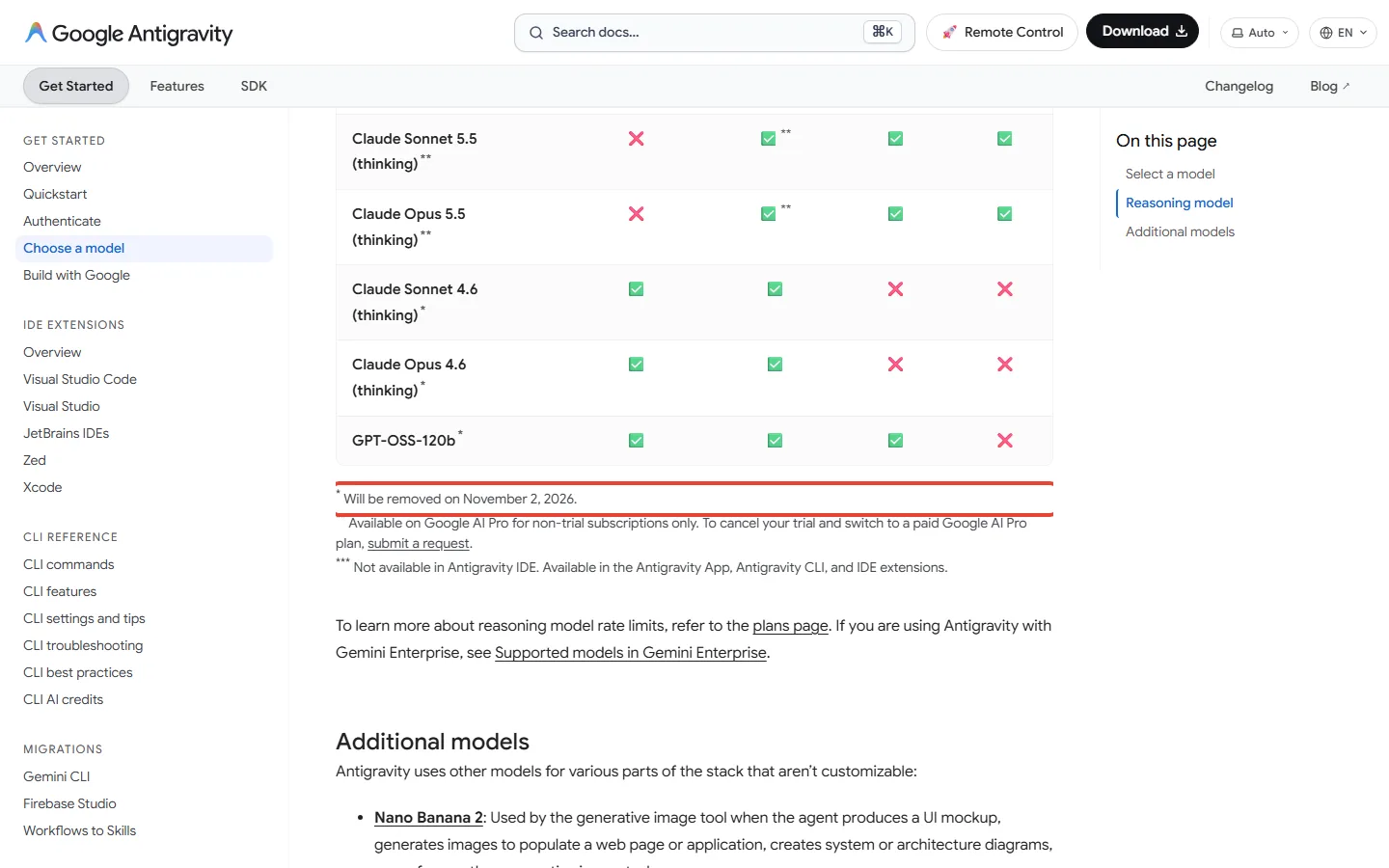
Antigravity: Google’s own app gives free users Claude Sonnet 4.6 and Opus 4.6 until November 2, 2026. That’s not Claude Code, and Google’s FAQ says using third-party software such as Claude Code to access Antigravity “is a violation of our Terms of Service”.
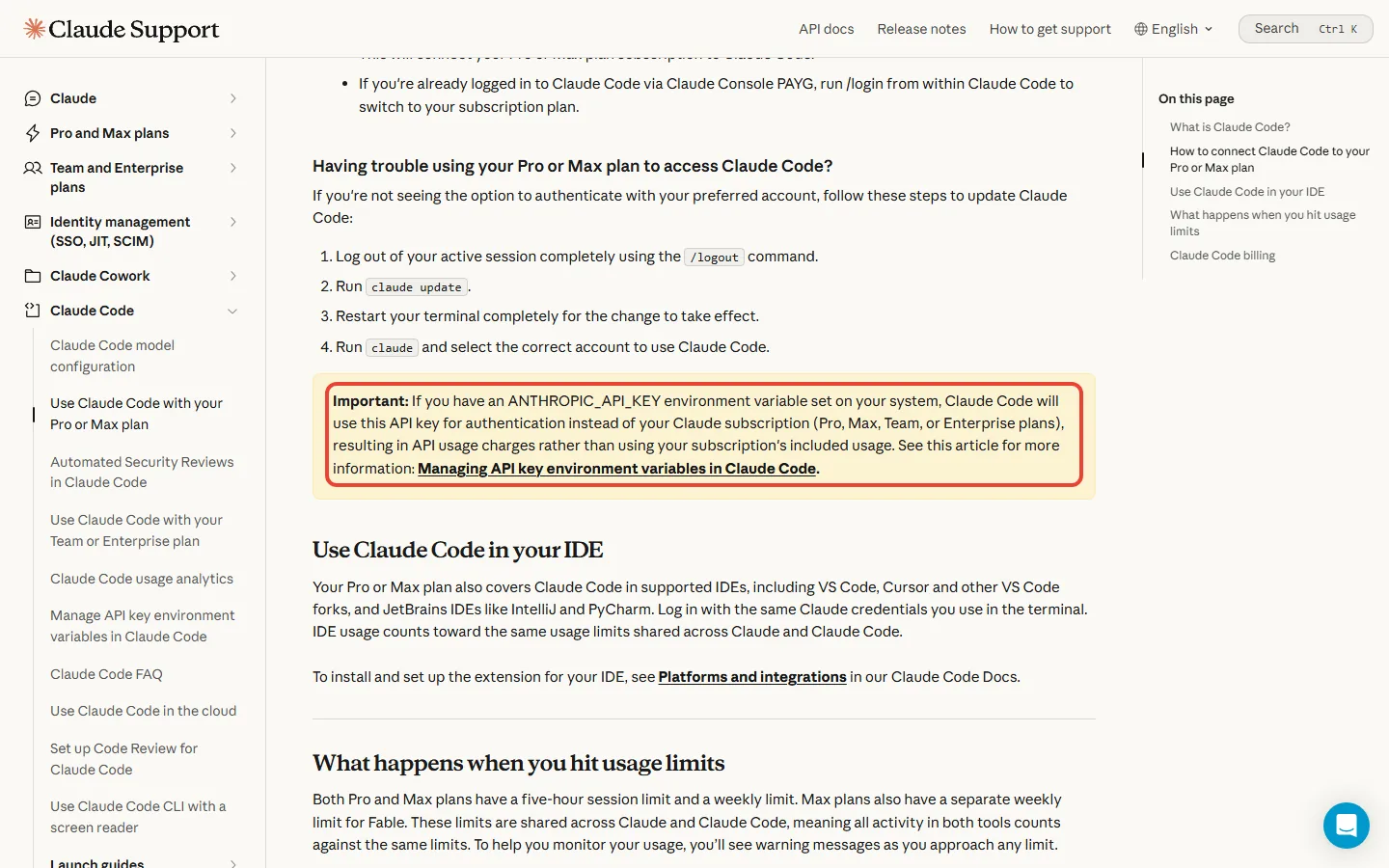
⚠️ The Catch: if an ANTHROPIC_API_KEY variable is set on your computer, Claude Code bills the API instead of your Pro plan.
📑 Quick Navigation
Is Claude Code free on Claude’s Free plan?
No. On Claude’s pricing page, the compare table has a Claude Code row: No on Free, Yes on Pro, Max 5x and Max 20x. The Pro and Max cards both say “Claude Code included”, and the FAQ says it plainly: “Claude Code is included in all paid plans.”
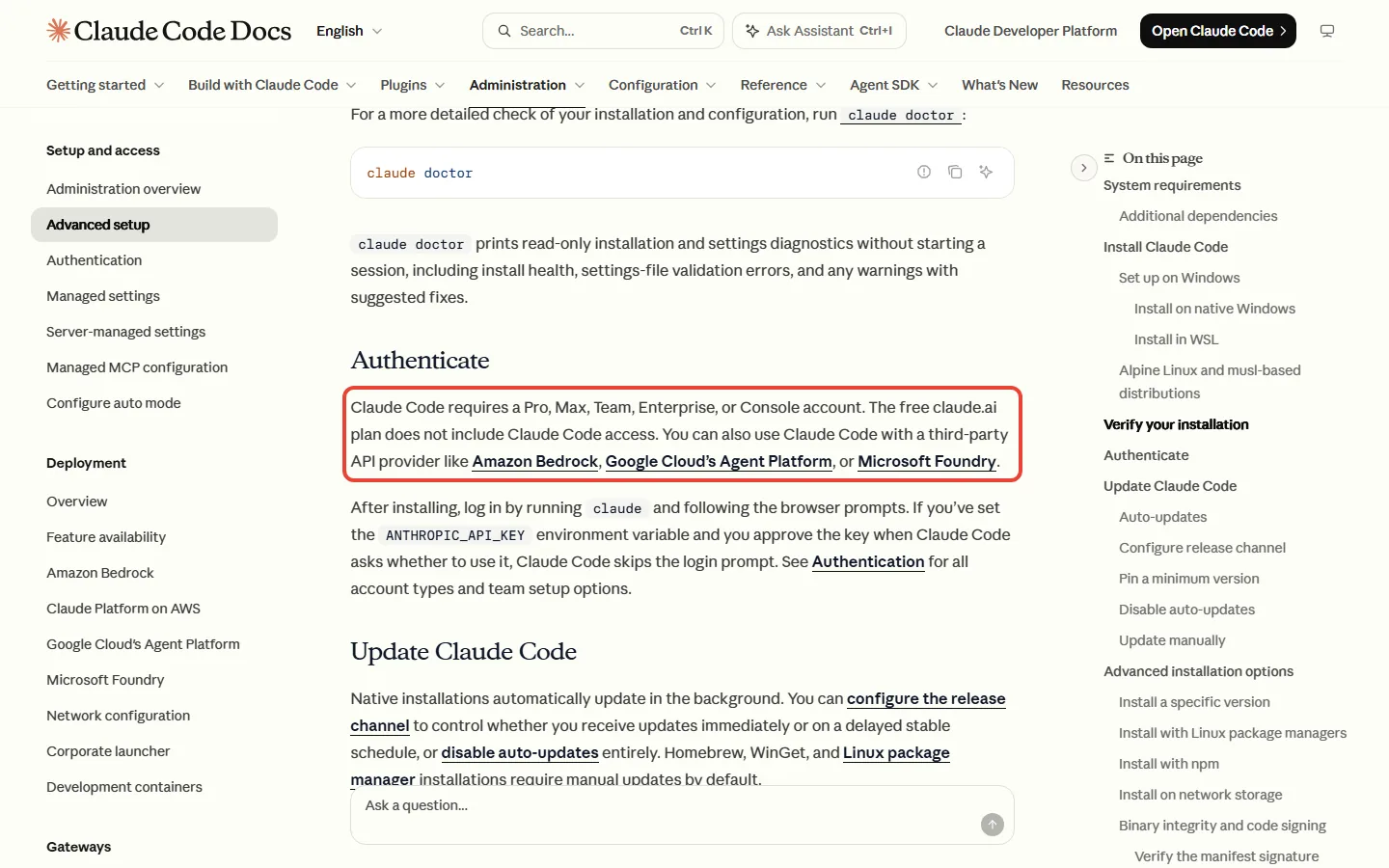
The setup docs say the same from the other side. Claude Code needs a Pro, Max, Team, Enterprise or Console account, and “The free claude.ai plan does not include Claude Code access”. So a free Claude account can chat, but its plan doesn’t include Claude Code access.
There is no free trial of Claude Code or Pro on the pages we read: the pricing page, the setup docs and Anthropic’s Claude Code help article, all checked on October 21, 2026.
Every way to run Claude Code, and what each one really costs
The second column is the one that matters: which company’s model actually answers you.
| Route | Which model answers | What you pay | The catch |
|---|---|---|---|
| Claude Free plan | None: no Claude Code access | $0 | No Claude Code access at all |
| Claude Pro | Claude (Anthropic) | $20 a month, or $200 a year | Shares one set of limits with your Claude chats: a five-hour session limit and a weekly limit |
| Claude Max | Claude | From $100 a month, for 5x or 20x Pro’s usage per five-hour session | Its monthly API credits can’t be used in Claude Code |
| Console API credits | Claude | Per token: Sonnet 5.5 is $2 per million tokens you send and $10 per million it writes; Opus 5.5 is $4 and $20 | Auto-reload can buy more credits for you when the balance runs low |
| Ollama | Open models, on your computer or Ollama’s cloud | $0 on your own hardware; cloud models use credits (Ollama Pro is $20 a month) | Not Claude. Ollama says to set a 64k+ context window (how much text the model can hold at once) for local models |
| DeepSeek | DeepSeek’s own models | Prepaid balance; deepseek-flash is $1.20 per million output tokens at peak | Its example setup points Claude Code’s model slots at deepseek-flash, not Claude |
| Claude Code Router | Whichever provider you add | That provider’s price, with your own API key | Anthropic doesn’t support routing Claude Code to non-Claude models |
| Google Antigravity (free tier) | Claude Sonnet 4.6 and Opus 4.6, inside Google’s app | $0, with basic weekly rate limits (a cap on how much you can use each week) | Not Claude Code, and the two Claude models go on November 2, 2026 |
Anthropic’s own routes to Claude inside Claude Code are two: a paid Claude plan, or pay-per-token API credits (a token is a chunk of text the model reads or writes). Amazon Bedrock, Google Cloud’s Agent Platform and Microsoft Foundry are versions of the second one, billed per token to your cloud account. OpenRouter behind Claude Code Router is a third way to reach Claude, also paid by usage (more below).
Pro or pay per token: two worked examples
Say you code a few evenings a week on side projects. Pro is the plan to start with, though Anthropic doesn’t publish how much work its limits cover: its pricing FAQ says there’s “no fixed message count”. Paying monthly, Pro is $240 over a year; the annual plan is $200, so it saves $40 if you’re sure you’ll keep it.
Now say you code on 20 days in a month and pay per token instead. Anthropic’s cost docs put enterprise deployments at about $13 per developer per active day and $150-250 per developer per month. At $13 a day, 20 days comes to about $260 by our maths.
Both figures are above Max’s $100 starting price, so our reading is: if your days look like that average, Max likely costs less, as long as its limits cover your work. It’s an enterprise average, so light use can come in well under it.
Pay-per-token makes sense the other way round: a few heavy weeks a year, not a steady habit. Anthropic itself suggests Console credits “for intensive coding sprints”. Our Claude subscription guide compares Free, Pro and both Max tiers in more detail, and Opus 5.5 vs Sonnet 5.5 covers which model to pick on Pro.
What the “Claude Code free” setups actually run
Claude Code is two things: an app that reads your files and runs commands, and the model behind it that does the thinking. The free setups keep the app and replace the model. Think of it as keeping the car and putting a different engine in it.
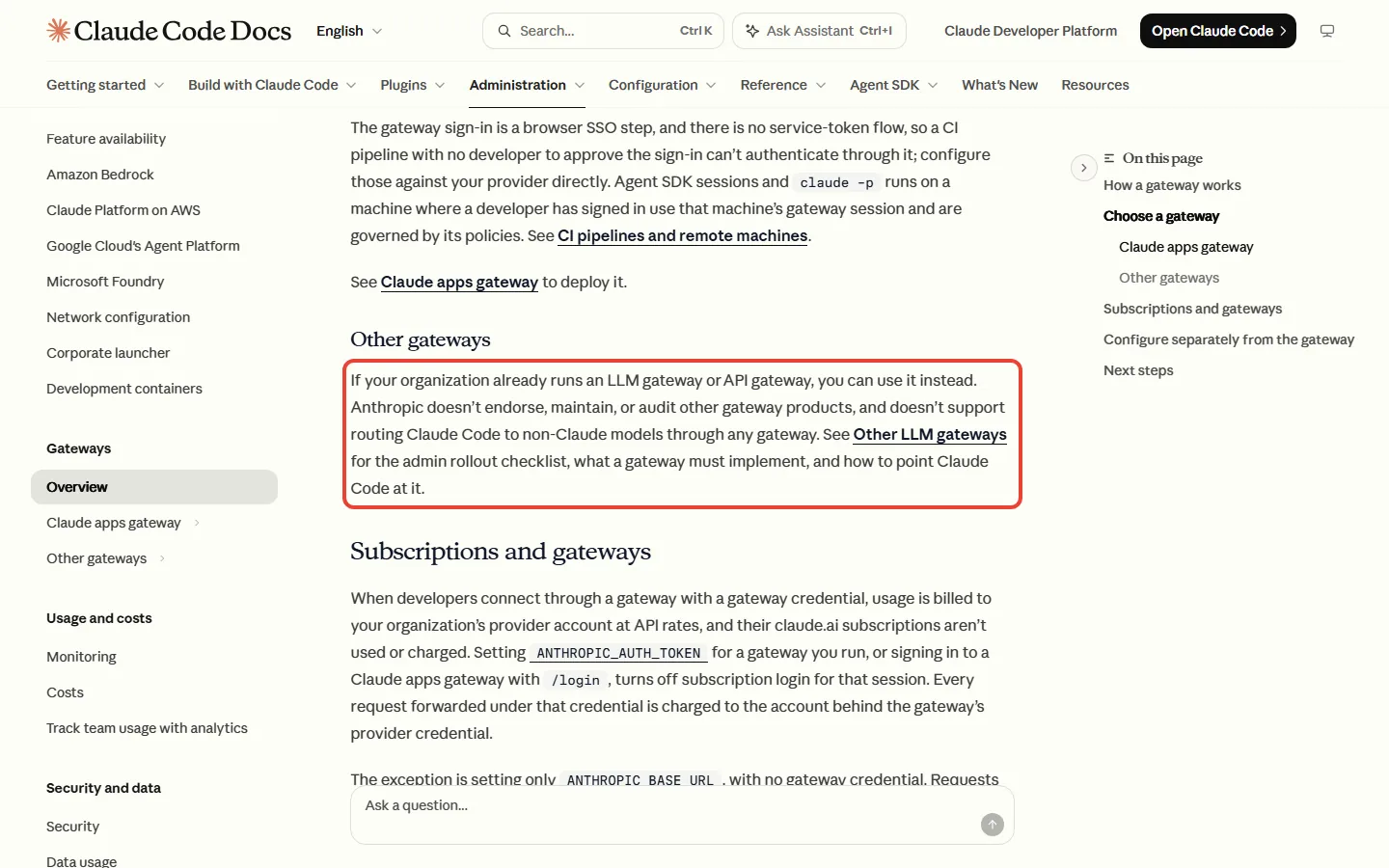
Anthropic’s gateway docs draw the line clearly: “Anthropic doesn’t endorse, maintain, or audit other gateway products, and doesn’t support routing Claude Code to non-Claude models through any gateway.” So if you point Claude Code at another company’s model, you’re outside what Anthropic supports. The page mentions no penalty for doing it, only the lack of support (read October 21, 2026).
Ollama: free on your own computer, but not Claude
Ollama’s own Claude Code page says it “connects Claude Code to local and cloud models through its Anthropic-compatible API”. On your own hardware Ollama charges nothing, and its pricing page says local use “is always unlimited”. The models are open models, not Anthropic’s.
Two limits. First, Ollama asks for a 64k+ context window for local models, which is how much text the model can hold at once; Ollama’s pricing page doesn’t say what computer you need for that. Second, its cloud models are not free beyond starter credits: Ollama Pro is $20 a month or $200 a year, with $60 of usage credits a month. That’s the same sticker price as Claude Pro, for models that aren’t Claude.
DeepSeek: cheap per token, prepaid, and your data goes to DeepSeek
DeepSeek publishes its own Claude Code setup: you point Claude Code at api.deepseek.com/anthropic and use a DeepSeek API key. Its example sets the main, Opus and Sonnet model slots to deepseek-flash, so every request runs on DeepSeek’s model. If Claude Code sends a claude-opus name instead, DeepSeek maps it to deepseek-v4-pro.
It isn’t free: you top up a balance and DeepSeek deducts from it. Per million output tokens at peak, deepseek-flash is $1.20 and deepseek-v4-pro is $3.96, with off-peak at half price. Against Anthropic’s list prices that’s roughly an eighth of Sonnet 5.5’s output price and a fifth of Opus 5.5’s. That’s a price per token, not per finished task, and neither price page says how many tokens the same job takes on each model.
The trade-off is where your work goes. Because the setup points Claude Code at api.deepseek.com, your prompts and the code it reads go to DeepSeek. Separately, DeepSeek’s privacy policy says it collects, processes and stores personal data in the People’s Republic of China. If the code belongs to an employer or a client, check their rules first. Our DeepSeek review covers the models themselves.
Claude Code Router: free software, paid models
Claude Code Router is an open-source project by musistudio on GitHub, under the MIT license, so the software costs nothing. You add each model provider with that provider’s own API key, and the router runs a small gateway on your computer that Claude Code talks to. Its list includes OpenRouter, DeepSeek, Moonshot, Kimi Code, Mistral and Z.AI, so the bill comes from whichever of those you pick.
OpenRouter is one way to put Claude itself behind the router: it is one interface for many companies’ models, Claude Opus 5.5 included, with no subscription; you buy credits. At that point you’re paying for Claude per token, just through a middleman. We cover setup, the GitHub project and its risks in our Claude Code Router review.
Is Claude free in Google Antigravity?
Yes, two older Claude models until November 2, 2026, and not in Claude Code. Antigravity’s models table gives Free and Google AI Plus users Claude Sonnet 4.6 and Claude Opus 4.6, with the footnote “Will be removed on November 2, 2026”. The newer Claude Sonnet 5.5 and Opus 5.5 need a paid Google AI Pro plan ($19.99 a month in the US, not a trial), Ultra or Enterprise.
The free tier is $0 with “Basic weekly rate limits”, a weekly cap on use. Neither Antigravity’s pricing page nor its plans page gives a number for it (read October 21, 2026); the plans page says only “A meaningful quota, refreshed weekly”. More important: this is Google’s own coding app, not Claude Code. Google’s Antigravity FAQ, answering a question that names Claude Code, says “Using third-party software, tools, or services to access Antigravity is a violation of our Terms of Service”, and that this “can result in suspension or termination of your account”. For a third-party coding agent, Google recommends a Gemini Enterprise or Google AI Studio API key instead.
So Antigravity vs Claude Code isn’t a free-versus-paid version of the same thing. It’s two different apps. Our Google Antigravity review covers its plans and limits.
Free Claude Code for maintainers, teachers and researchers
Three groups, each with an application and conditions:
- Open-source maintainers: Claude for Open Source offers 6 months of free Max 20x. One route in is maintaining packages with 500 or more dependent repos, 100 or more dependent packages, or 200,000 or more combined monthly downloads across registries such as npm and PyPI; the page lists others. After 6 months the free plan ends.
- US K-12 teachers: Claude for Teachers is free for verified educators, a full year for sign-ups by June 30, 2027, with “Pro-level features, with Claude Code and Claude Cowork”.
- Research groups: verified principal investigators can get a Team plan with free Standard seats (Premium seats are $15 a month) for 12 months, after which seats renew at the then-current price. The free Standard seat lists access to Claude Code, and Anthropic says availability is limited and not guaranteed.
Students aren’t one of these three groups. If you’re a student weighing other AI plans, our guide to free Google AI Pro offers lists the student deals we’ve checked on Google’s own pages.
Already paying for Pro? Two ways Claude Code can still cost you more
The API key on your computer. Anthropic’s Claude Code help article warns that if an ANTHROPIC_API_KEY environment variable is set, Claude Code uses it “instead of your Claude subscription”, “resulting in API usage charges”. An environment variable is a setting your computer hands to the programs you run. If you logged in through Console pay-as-you-go before, run /login inside Claude Code to switch to your plan.
The API credit option at a limit. When you reach a limit, Claude Code can offer to keep going on API credits; decline it and you stay inside your plan. If you accept and auto-reload is on in your Console account, the Console tops up your balance automatically when it runs low. Turn auto-reload off in Console billing if you want a hard stop.
🔍 REALITY CHECK
What Anthropic says: “Claude Code is included in all paid plans.”
The fine print: it draws on the same limits as your Claude chats, a five-hour session limit and a weekly one. Past a limit, usage credits keep you going at standard API rates if you turn them on, and the monthly API credits that come with Max can’t be spent in Claude Code.
Verdict: included means included within your plan’s limits. A heavy day in Claude Code leaves less for chat, and going past a limit means waiting for the reset, upgrading, or paying standard API rates with usage credits on.
To see where you stand before you hit a wall, type /status in Claude Code; it shows your remaining allocation.
Claude Code cost FAQ
How much is Claude Code?
Claude Code costs $20 a month through Claude Pro, or $200 a year on the annual plan. Max starts at $100 a month, and you can also pay per token with API credits from a Console account.
Does Claude Pro include Claude Code?
Yes. Claude Code is included in every paid plan, in the terminal and in VS Code, Cursor and JetBrains IDEs, on the same limits as your Claude chats.
Is Claude Code Router free?
The software is: Claude Code Router is an MIT-licensed project on GitHub. The models aren’t: you add each provider with your own API key and pay that provider, and Anthropic doesn’t support routing Claude Code to non-Claude models.
Can I use Claude Code with Ollama for free?
Yes, with open models running on your own computer, which Ollama doesn’t charge for. You get the Claude Code app, not Claude, and Ollama’s cloud models need usage credits beyond the starter amount.
Can I use Claude Code with my Google Antigravity account?
No. Google’s Antigravity FAQ, answering a question that names Claude Code, says using third-party software to access Antigravity violates its terms and can lead to suspension or termination of your account. Google points third-party coding agents to a Gemini Enterprise or Google AI Studio API key.
What happens when Claude Code hits the Pro limit?
You wait for the reset, upgrade to Max 5x, turn on usage credits, or switch to Console API credits; those are the four options Anthropic’s help center lists. Pro has a five-hour session limit and a weekly limit, both shared with your Claude chats.
Which route should you pick?
- You want Claude doing the work: Claude Pro, $20 a month. Go annual ($200) only once you know you’ll use it all year.
- You code every day and Pro keeps running out: Max from $100, below the $150-250 a month Anthropic reports for enterprise developers paying per token.
- You code in bursts a few times a year: Console API credits, with auto-reload off.
- You want a free agent and don’t need Claude: Ollama with a local open model, free on your own hardware if it can run a model with a 64k+ context window.
- You just want to try Claude for coding at $0: Antigravity’s free Claude 4.6 models, in Google’s app, until November 2, 2026.
If you’re still choosing between coding tools, see Claude Code vs Cursor and what ChatGPT Plus gets you in Codex.
Sources and how we checked: Anthropic’s pricing page, API pricing, Claude Code setup, costs and gateway docs and its Claude Code help article; Google’s Antigravity models, FAQ, plans and pricing pages; Ollama’s, DeepSeek’s and OpenRouter’s own pages; and the Claude Code Router README, all read on October 21, 2026. We did not run any of these setups; this page reports what each vendor publishes.

Founder of AI Tool Analysis. Reads the pricing pages and help articles behind each claim. See how we research →
Stay Updated on AI Plans and Prices
AI plans and features change every few weeks. Get the changes that affect what you pay, straight from the vendors’ own pages.
- Honest Breakdowns: We read the vendors’ own pricing pages, docs and help centers
- Price Tracking: Know when plans change price or limits
- Comparison Updates: As the market shifts, we update our verdicts
- No Hype: Just the AI news that matters for your wallet
Free, unsubscribe anytime.

Related Reading
- Claude Subscription 2026: Free vs Pro vs Max
- Claude Code Router Review 2026
- Claude Code vs Cursor 2026
- Google Antigravity Pricing and Review 2026
- GLM Coding Plan Review (2026)
- Claude Opus 5.5 vs Sonnet 5.5
- Best Claude Code Plugins 2026
- DeepSeek Review
Last Updated: October 21, 2026
Facts checked: October 21, 2026 (plans, prices and limits against each vendor’s own pages)
Next Review Update: November 2, 2026 (Antigravity’s Claude 4.6 removal)
Have a tool you want us to cover? Suggest it here | Questions? Contact us