
Opus 5.5 vs Sonnet 5.5 sounds like a question about which model is smarter. On a $20 Claude plan it is really a question about your usage limit. Both models sit in the same picker, both draw from the same weekly allowance, and one of them can spend that allowance several times faster. This guide uses Anthropic’s own pages and one independent benchmark site to work out which model should be your default.
The short version: Sonnet first, Opus when the job needs it. On Anthropic’s eight-row benchmark table Opus 5.5 leads on seven rows, usually by two or three points, and Sonnet 5.5 wins one. Anthropic says Opus is still clearly stronger at complex, open-ended work, and its own Claude Code guide calls Sonnet the right choice for the large majority of coding work. The catch: Claude Code’s default on Pro and Max is Opus 5.5. Best for: Pro and Max subscribers who keep hitting limits. Skip if: you use Claude a few times a week and never see a limit warning. For the wider picture, see our Claude AI review and the Claude Code vs Cursor comparison.

⚡ TL;DR: Opus 5.5 vs Sonnet 5.5 on the $20 Plan
🧠 Anthropic’s own tests: Opus 5.5 leads on 7 of 8 rows, mostly by 2 to 3 points. Sonnet 5.5 wins Terminal-Bench 4.0 by 4.2 points.
🔋 Your limit: one pool for both models. Anthropic calls Opus “heavy” and says it costs “several times more per turn” than Sonnet in Claude Code.
💡 Our take: Sonnet 5.5 at the default effort for everyday work, Opus 5.5 for long, open-ended or judgment-heavy jobs, or when Sonnet struggled.
⚠️ The catch: Claude Code defaults Pro and Max to Opus 5.5, so routine edits spend Opus until you run /model sonnet.
📑 Quick Navigation
⚖️ Opus 5.5 vs Sonnet 5.5: Two Models, One $20 Plan
Anthropic launched Claude Opus 5.5 on September 22 and Sonnet 5.5 on September 28. Its Opus launch page says Opus 5.5 “performs at the level of Claude Fable 5.1 on most work and costs 40% less to run than Opus 5”. The Sonnet launch page calls Sonnet 5.5 its fastest Sonnet to date, at up to 30% less per task than its predecessor, which is Sonnet 5, not Opus.
Anthropic’s own positioning is the easiest way to tell them apart. Sonnet 5.5 is “strongest at well-scoped everyday tasks, fixing bugs, and creating polished documents, slides, and spreadsheets.” Opus 5.5, it says, “remains clearly stronger at complex, open-ended work requiring sustained judgment.” Think of Sonnet as the quick colleague you hand a clear brief to, and Opus as the senior one you call when the brief is vague.
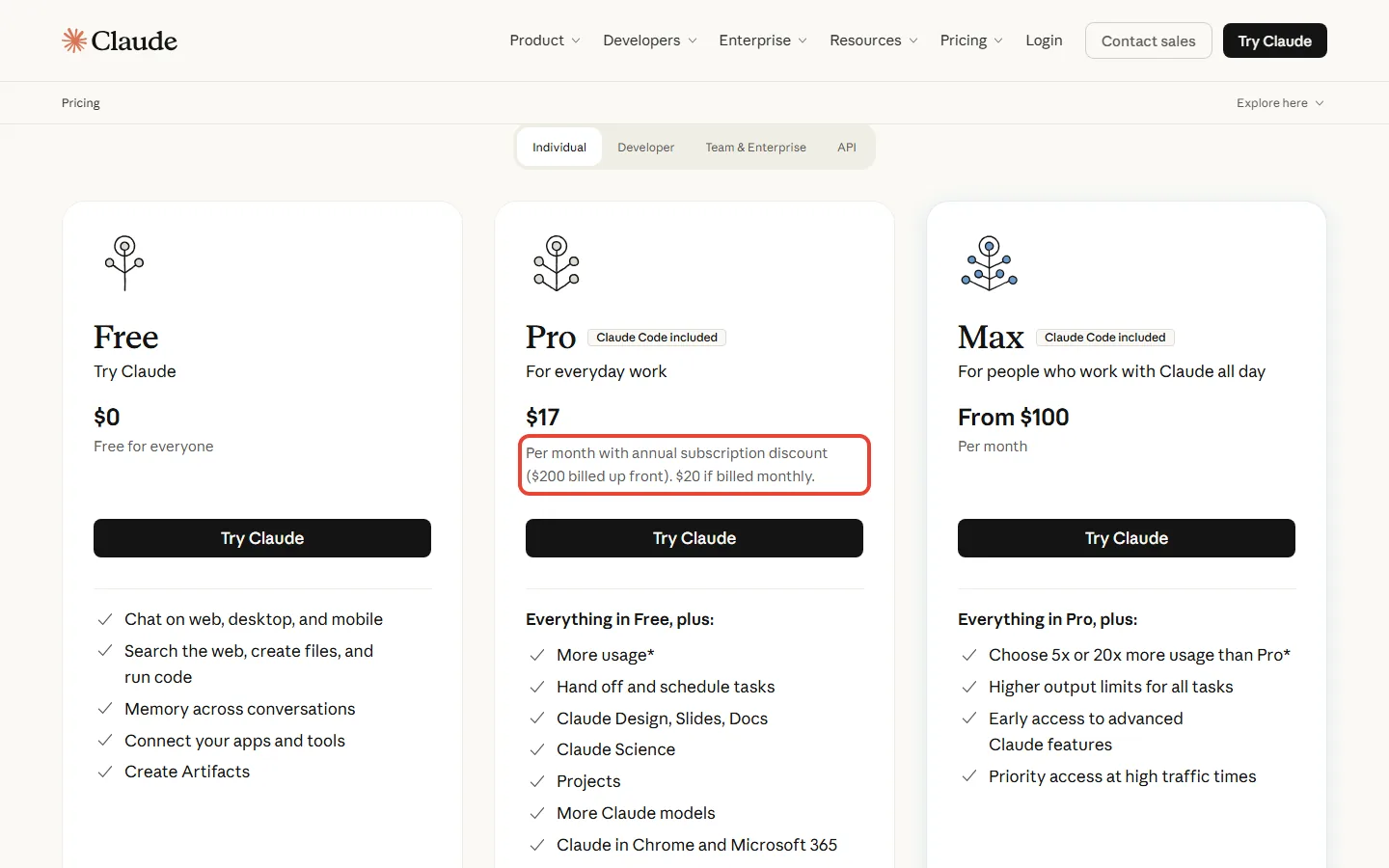
Here is who gets which model, from Anthropic’s pricing page:
| Plan | Price | Opus 5.5 | Sonnet 5.5 |
|---|---|---|---|
| Free | $0 | No | Yes |
| Pro | $20 billed monthly, or $17 a month on the annual plan ($200 up front) | Yes | Yes |
| Max | From $100 a month | Yes | Yes |
The real-world cost math: Pro at $20 a month is $240 a year billed monthly, or $200 a year on the annual plan (about $16.67 a month, which the page rounds to $17). Either way you pay once for both models. Choosing Sonnet does not make your plan cheaper. It makes your limit last longer.
One level above both sits Claude Fable, which Anthropic’s pricing table puts on Pro through usage credits only. We cover it in our Claude Fable review.
📊 What Anthropic’s Own Tests Show
Anthropic’s Sonnet 5.5 launch page puts both models in one table. These are vendor-run scores, so read them as Anthropic’s claim, not a neutral ruling.
| Benchmark | Sonnet 5.5 | Opus 5.5 | Who leads |
|---|---|---|---|
| Terminal-Bench 4.0 (agentic coding) | 70.6% | 66.4% | Sonnet, by 4.2 points |
| FrontierCode 1.1 (coding) | 46.2% at Max effort, 52.1% at Xhigh | 54.4% | Opus, by 2.3 to 8.2 points |
| CursorBench 4.0 (coding) | 55.5% | 57.8% | Opus, by 2.3 points |
| GDPval-AA v2.1 (knowledge work) | 1844 | 1846 | Opus, by 2 Elo |
| AA-Briefcase v1.1 (knowledge work) | 1811 | 1822 | Opus, by 11 Elo |
| Humanity’s Last Exam (with tools) | 64.5% | 67.7% | Opus, by 3.2 points |
| OSWorld 2.1 (computer use, partial) | 80.1% | 81.8% | Opus, by 1.7 points |
| Chartography (charts, no tools) | 61.6% | 64.4% | Opus, by 2.8 points |
Two footnotes from the page matter. Opus’s Terminal-Bench score was run at Xhigh effort. And the two Elo rows were run by Artificial Analysis on a pre-release build with a bug that Anthropic says is now fixed.
Add it up and Opus 5.5 leads on seven of the eight rows, while Sonnet 5.5 leads one. On most rows the gap is two to three points. So “within about two to three points on most of Anthropic’s own tests” is fair, and “Sonnet ties Opus” is not.
📊 Anthropic’s Own Scores: Sonnet 5.5 vs Opus 5.5 (%)
The pattern holds across coding, knowledge work and computer use: Opus is ahead, but only just. Anthropic makes a point of saying so itself, and it is also careful about how far that closeness goes.
🔍 REALITY CHECK
The claim: “On several evaluations, Sonnet 5.5 at Max effort even performs comparably to Opus 5.5.”
The fine print: The same Anthropic page continues that Opus 5.5 “remains clearly stronger at complex, open-ended work requiring sustained judgment”. The scores are vendor-run, and on FrontierCode the gap is 8.2 points when Sonnet runs at Max effort.
✅ Verdict: Close enough on routine work to make Sonnet your default. Anthropic itself keeps Opus for the hard cases.
An independent check: Artificial Analysis
Artificial Analysis, a third-party benchmark site, runs both models at its Max effort setting. As of October 6 it gives its comparison page an Intelligence Index of 58 for Opus 5.5 and 56 for Sonnet 5.5. Sonnet is faster, at 128 tokens a second against Opus’s 97.
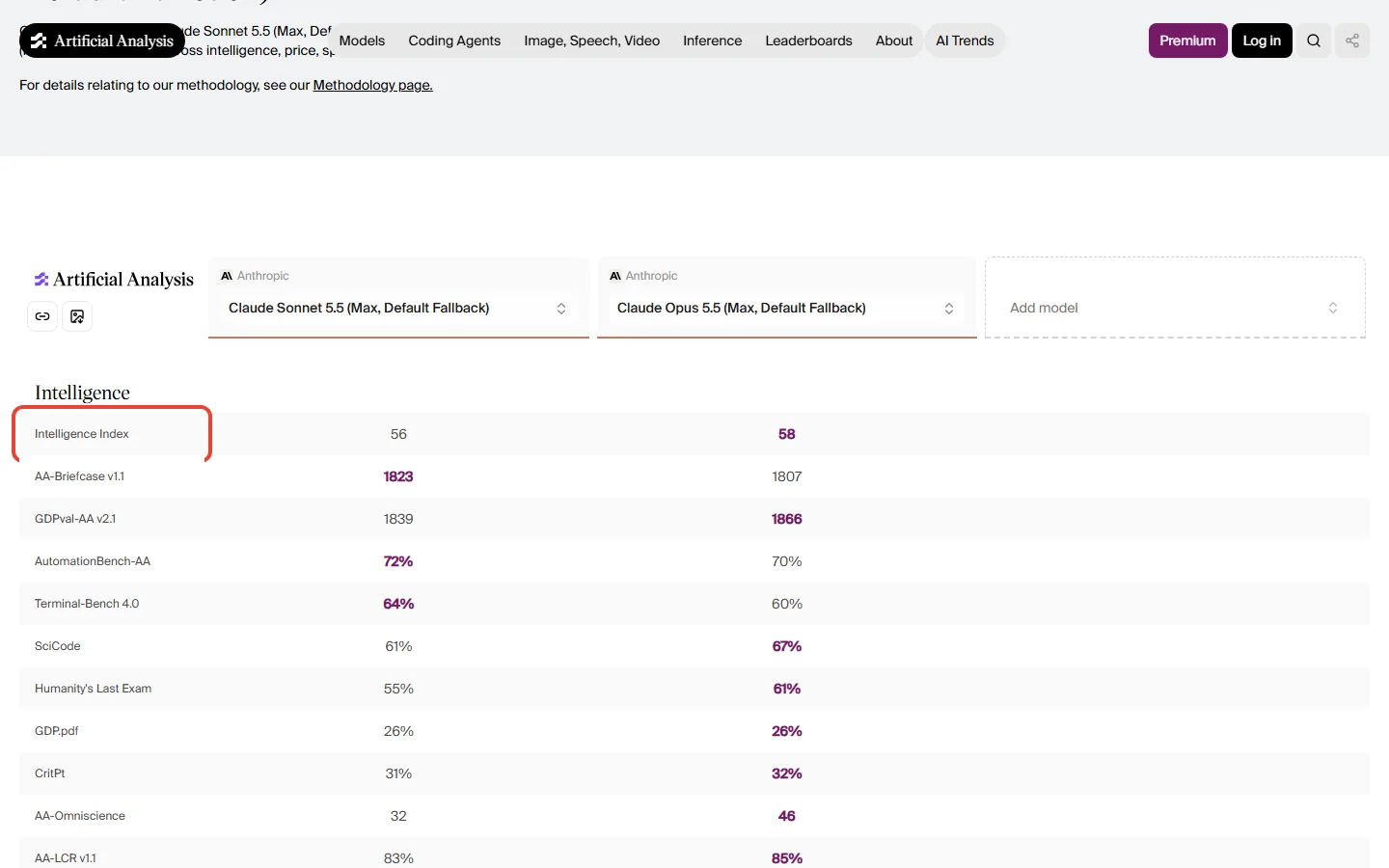
The surprise is cost. At that max effort setting, Artificial Analysis puts Sonnet 5.5 at $7.67 per task and Opus 5.5 at $5.98, because Sonnet wrote about 197k output tokens per task against Opus’s 119k. That matches Anthropic’s own wording that Sonnet “complements Opus 5.5 best when running at lower effort settings, where it costs less per task.” These figures move whenever the site re-runs its tests, so treat them as a snapshot.
📬 Tracking AI price changes?
Get honest AI tool pricing analysis delivered weekly. No hype, no spam.
🔋 How Each Model Drains Your Limit
This is the part the benchmark tables skip. Claude’s Pro help page says it plainly: “Pro plans also have a weekly usage limit that applies across all models.” There is no separate Opus allowance and no separate Sonnet allowance.
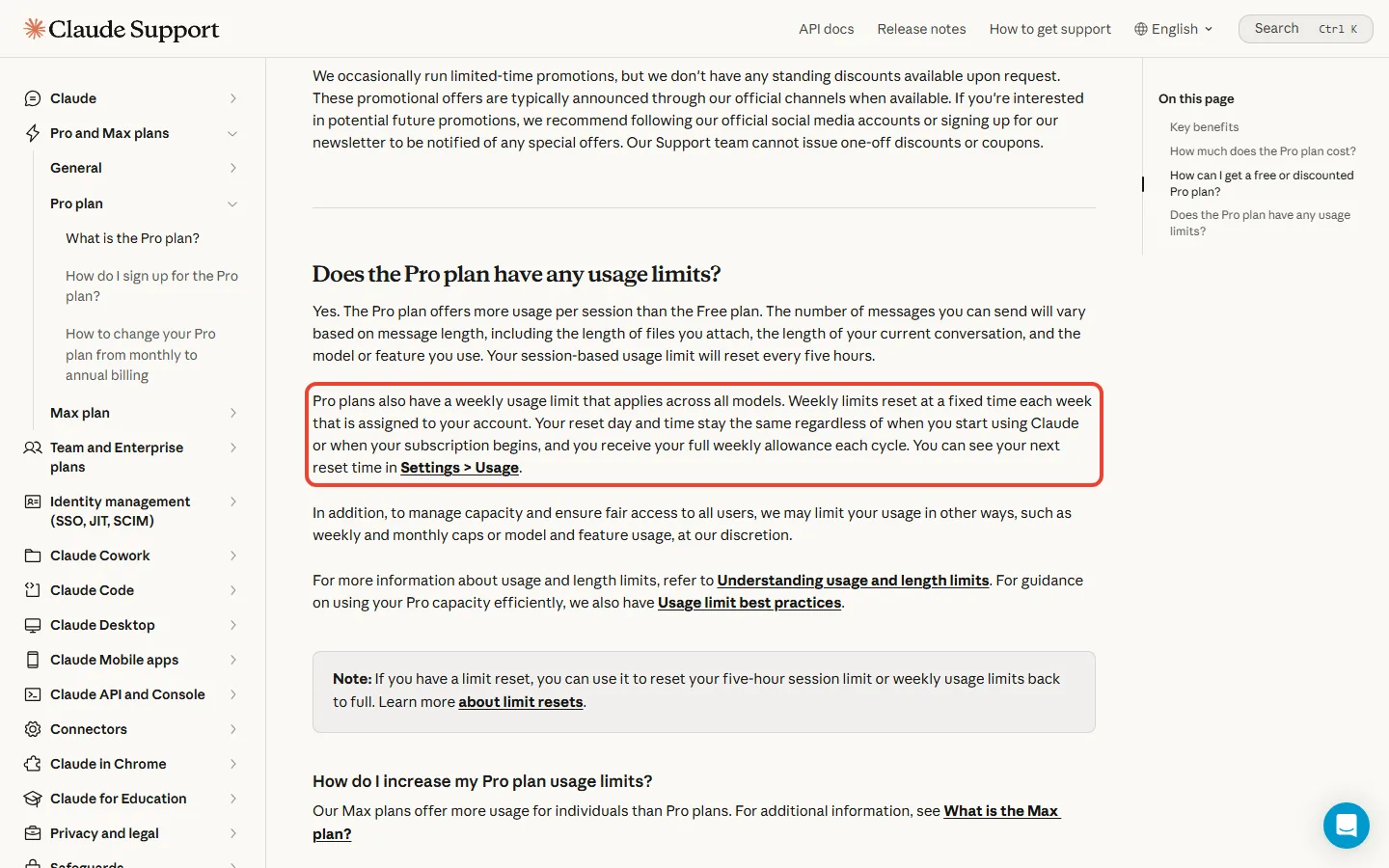
The pricing page adds that your activity on web, desktop, mobile and Claude Code “all draws from the same pool”, and that there is “no fixed message count” because it depends on conversation length, features and “the model you choose”. So the model is one of the dials on how fast the pool empties.
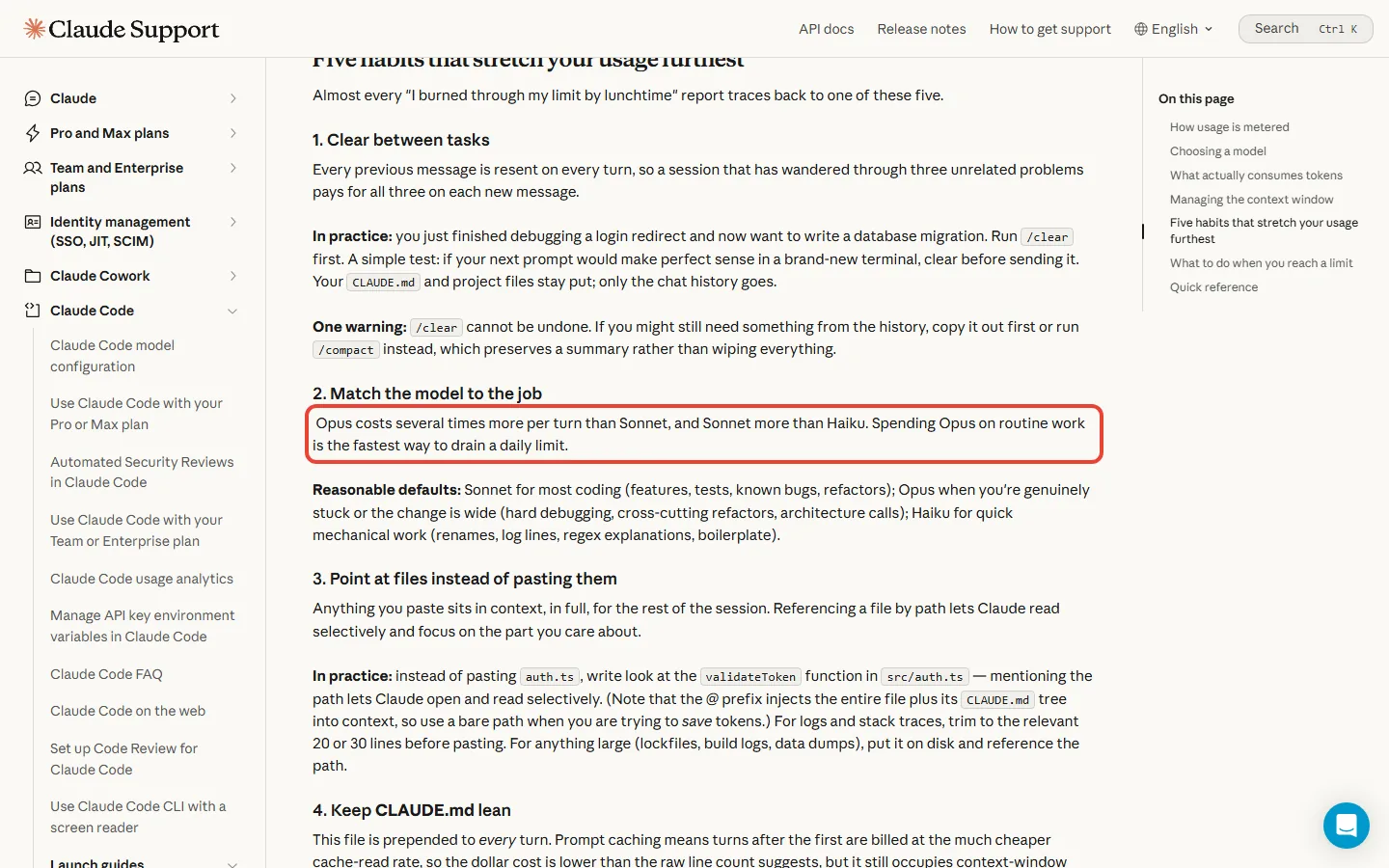
How big is that dial? Anthropic’s Claude Academy says “Haiku is the lightest, Sonnet is moderate, Opus is heavy, and Fable uses the most.” Its Claude Code guide is blunter: “Opus costs several times more per turn than Sonnet.”
🔍 REALITY CHECK
The claim: “Spending Opus on routine work is the fastest way to drain a daily limit.” (Anthropic’s Claude Code guide)
The fine print: Anthropic gives no exact ratio for plan limits, only “several times more per turn”. The 2x figure you may see is the API list price per token ($4 input and $20 output per million tokens for Opus 5.5, against $2 and $10 for Sonnet 5.5). That is API pricing, not a plan multiplier, and at max effort Sonnet wrote more tokens per task.
✅ Verdict: Opus drains the pool faster per turn. Don’t turn it into a number Anthropic hasn’t published.
There is good news too. When Opus 5.5 launched, Anthropic said it was “increasing five-hour usage limits on Pro, Max, Team, and seat-based Enterprise plans”, and its developer cost post says the lower Opus 5.5 price is passed on so limits “go about 25% further than on Opus 5.” That is a comparison with the older Opus, not with Sonnet.
| Model | API input, per million tokens | API output, per million tokens |
|---|---|---|
| Opus 5.5 | $4 | $20 |
| Sonnet 5.5 | $2 | $10 |
The real-world cost math: at list price, $20 ÷ $10 = 2, so a million output tokens costs Opus twice what it costs Sonnet. Subscribers don’t pay per token for normal plan usage (Anthropic says usage credits, if you turn them on, bill at standard API rates), so this only shows the direction, not how many messages you get.
💡 Key Takeaway: Both models spend the same pool. Put routine work on Sonnet and the pool lasts longer, which is what Anthropic’s own guides recommend.
⚠️ The Catch: Claude Code Defaults to Opus 5.5
Anthropic’s Claude Code model docs state the default in one line: “Pro, Max, Team, Enterprise, and Anthropic API: defaults to Opus 5.5.” Before Claude Code v2.1.280, the same page says, the default on Pro and Team Standard resolved to Sonnet 5.
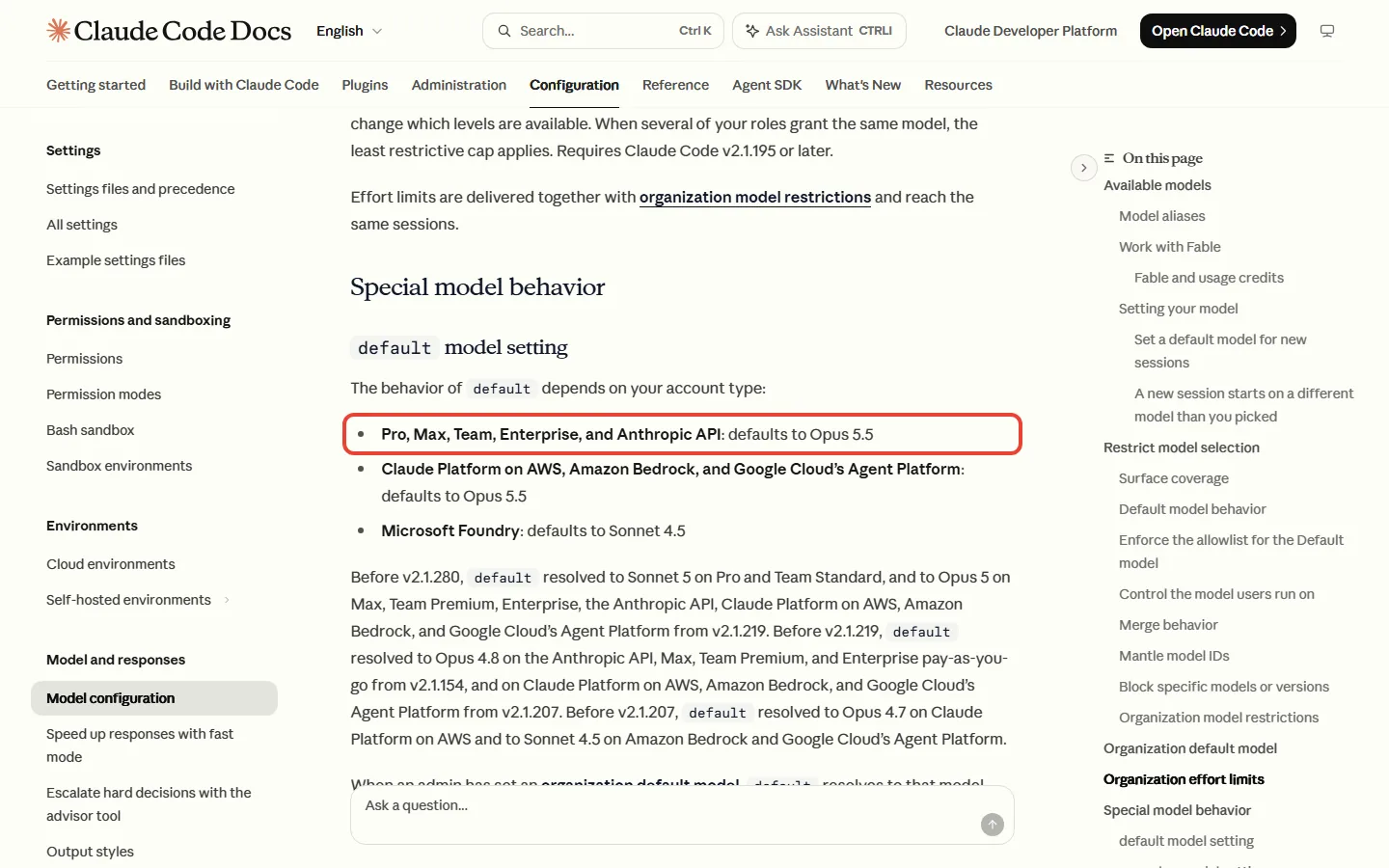
That is the opposite of Anthropic’s own advice. Its Claude Code guide says “Sonnet is the right choice for the large majority of coding work” and that Opus “uses meaningfully more of your quota”. So unless you changed the setting, your routine edits are spending Opus.
For the Claude apps, Anthropic’s pages don’t say which model a new chat starts on, so don’t assume. Check the model name beside the message box.
Even Anthropic’s guides split on coding
Anthropic’s developer cost post says to “keep code edits on Opus 5.5”, and then notes that the opusplan alias, which plans with Opus and executes with Sonnet, is “the opposite of the advice above”. Its Claude Code help article recommends that same plan-then-execute pattern. The honest summary: Sonnet for routine work, Opus for the hard parts, and check what works for your own tasks.
If coding bills are your worry, our Claude Code vs Cursor guide compares the $20 plans, and our Claude Code Router review covers a tool that routes Claude Code requests between models.
🎚️ The Setting That Changes the Math: Effort
Both models have an effort setting that controls how long they think. Anthropic says the default in Claude Code and its apps is Medium, and its Claude Code docs say the same for Opus 5.5 and Sonnet 5.5. Claude Academy explains the trade in plain terms: lower effort gives quicker answers that use less of your limit, and the highest settings are for your hardest problems.
Anthropic’s developer docs go further: “Tuning effort is often a better lever than switching models.” But its own cost post pulls the other way on price: “Model choice sets the price of every token in a session, so it moves the bill more than effort does.” Both can be true. The same post has a section titled “Raise effort before you change models”, so effort is the first thing to change when quality is the problem, while model choice moves the bill more.
💸 Cost per Task at Max Effort (Artificial Analysis, USD)
Anthropic’s advice for finding the sweet spot is simple: “Start at medium, and keep xhigh and max for work where you’ve measured a gain.” If a job fails on Sonnet at medium, try a higher effort or switch to Opus for that one job. Don’t leave both on the most expensive settings all day.
🎯 Which One Should You Use? Sonnet First, Opus When It Matters
Anthropic’s Claude Academy lists examples for each model. Put together with the launch-page positioning, they give a practical split:
| Job | Start with | Why (per Anthropic) |
|---|---|---|
| Writing and content | Sonnet 5.5 | Listed first under “Use Sonnet for” in Claude Academy |
| Everyday coding and bug fixes | Sonnet 5.5 | “The right choice for the large majority of coding work” (Claude Code guide) |
| Documents, slides, spreadsheets | Sonnet 5.5 | Named in the Sonnet 5.5 launch page |
| General work when you aren’t sure | Sonnet 5.5 | Claude Academy’s default pick |
| Deep research you’ll question and build on | Opus 5.5 | Listed under “Use Opus for” in Claude Academy |
| Long, open-ended, judgment-heavy work | Opus 5.5 | “Clearly stronger” per the Sonnet launch page |
| A task Sonnet struggled with | Opus 5.5 | Claude Academy: problems where Sonnet fell short |
Choose Sonnet 5.5 if: you write, summarise, plan or code in short loops and want your limit to last the week. It is also the faster model. Documents, slides and spreadsheets are exactly the work Anthropic names for Sonnet; see our reviews of Claude in PowerPoint and Claude in Excel.
Choose Opus 5.5 if: the task is long, vague or high-stakes, or Sonnet already stumbled on it. For heavier work, see our Claude Design review and Claude Cowork review.
Upgrade to Max if: you still hit the shared limit after moving routine work to Sonnet. Anthropic’s pricing page lists Max from $100 a month with 5x or 20x more usage than Pro. Stick with Pro if: you rarely see a limit warning. Comparing with other $20 plans? See our ChatGPT review.
🔧 How to Switch (and Make It Stick)
- In the Claude apps: choose the model and its effort level from the model picker, which is where Anthropic says the Effort setting lives.
- In Claude Code: run
/model sonnetfor routine work,/model opusfor complex reasoning, or/model opusplanto plan with Opus and execute with Sonnet. - To keep your choice: Anthropic’s docs say
/model“saves your choice as the default for new sessions”. - Version check: Sonnet 5.5 needs Claude Code v2.1.284 or later, and Opus 5.5 needs v2.1.280 or later.
🔭 What’s Next: Haiku 5.5 and Your Defaults
Short term: Anthropic’s Sonnet page says Claude Haiku 5.5 “will join the Claude 5.5 family in the coming weeks”. As of October 6 the release notes list no Haiku 5.5, and Anthropic has given no date. Expect a cheaper third option aimed at high-volume work when it arrives. Anthropic’s docs also show Claude Code’s default model changing several times, including at v2.1.280, so check the docs again after an update.
❓ Opus 5.5 vs Sonnet 5.5: FAQs
Q: Is Opus 5.5 better than Sonnet 5.5?
A: Usually, by a small margin. On Anthropic’s own table Opus leads seven of eight rows, mostly by two to three points, and Sonnet leads Terminal-Bench 4.0 by 4.2 points. Anthropic says Opus is clearly stronger at complex, open-ended work.
Q: Can I use both on the $20 Pro plan?
A: Yes. Pro includes both models. The Free plan includes Sonnet but not Opus, and both models draw from one shared weekly usage limit.
Q: Does Opus 5.5 use more of my limit than Sonnet 5.5?
A: Yes, per Anthropic: Opus is “heavy”, and in Claude Code it costs “several times more per turn”. Anthropic publishes no exact ratio for plan limits and no per-model message counts.
Q: Which model does Claude Code use by default?
A: Opus 5.5 on Pro, Max, Team, Enterprise and the Anthropic API, per Anthropic’s docs. Run /model sonnet to switch, and /model saves your choice for new sessions.
Q: Should I run Sonnet 5.5 at max effort instead of Opus 5.5?
A: Usually not. Anthropic says Sonnet works best at lower effort settings, where it costs less per task, and Artificial Analysis measured $7.67 per task for Sonnet at max effort against $5.98 for Opus.
Q: How much do the two models cost through the API?
A: Opus 5.5 is $4 input and $20 output per million tokens. Sonnet 5.5 is $2 and $10. Subscribers don’t pay per token for normal plan usage; usage credits, if you turn them on, bill at standard API rates.
Q: Is there a Claude Haiku 5.5?
A: Not yet. Anthropic says it will join the 5.5 family in the coming weeks, and its release notes didn’t list it as of October 6.
🏆 The Final Verdict: Sonnet First, Opus When It Matters
Verdict: DEPENDS, but with a clear default. On the $20 plan, make Sonnet 5.5 at medium effort your everyday model. It sits within about two to three points of Opus on most of Anthropic’s own scores, it is faster, and it keeps your single shared limit alive for longer. Reach for Opus 5.5 when the job is long, open-ended or judgment-heavy, or when Sonnet has already struggled. Then check one setting: if you use Claude Code, run /model sonnet so the default stops spending Opus for you.
✅ Why Sonnet First Works
- ✓ Within about 2 to 3 points of Opus on most of Anthropic’s own rows
- ✓ Anthropic’s fastest Sonnet, and faster than Opus on Artificial Analysis
- ✓ Stretches one shared limit, as Anthropic’s own guides advise
- ✓ Opus is one click away when you need it
❌ Where It Falls Short
- ✗ Anthropic says Opus is still clearly stronger on complex, open-ended work
- ✗ At max effort Sonnet’s cost edge can disappear
- ✗ Claude Code defaults to Opus, so you have to switch it yourself
- ✗ No published per-model message counts to plan around
Use Sonnet 5.5 if: you want your $20 to last the week. Use Opus 5.5 if: the work is hard enough that a re-run costs more than the extra usage. Still weighing plans? Start with the Claude pricing page, then read our Claude AI review and Gemini review for the rivals.

Founder of AI Tool Analysis. Reads every pricing page, help article and footnote so you don’t have to. Covering AI tools since 2025. See how we research →
Related Reading
- Claude AI Review 2026: Opus 5.5 and the Terminal-Coding Crown
- Claude Code vs Cursor 2026: Which $20 Tool Fits You?
- Claude Fable Review
- Claude Code Router Review
- Claude Cowork Review
- Claude Design Review
- ChatGPT Review 2026
- Google Gemini Review 2026
- ChatGPT Codex Review
Stay Updated on AI Tool Pricing
Don’t overpay for AI tools. Get weekly pricing updates, new tier alerts, and honest reviews delivered to your inbox. No hype, no spam.
- ✅ Price-change alerts for every major AI tool
- ✅ New tier announcements as they happen
- ✅ Honest comparisons that cut through marketing
- ✅ Safety updates on the tools you rely on
Free, unsubscribe anytime.

Last Updated: October 6, 2026 | Facts checked: October 6, 2026 (prices, limits and defaults against Anthropic’s own pages) | Next Review Update: October 20, 2026, or when Claude Haiku 5.5 launches.
Have a tool you want us to cover? Suggest it here | Questions? Contact us