
Claude Haiku 5.5 is Anthropic’s new small model, and it raises three questions for people who pay for Claude: who gets it, what it costs, and when it is the right model to pick. This guide answers them from Anthropic’s own pages as of October 10, 2026. It also covers the part that matters to Max subscribers: the new monthly API credit that arrived the same week, what it covers, and what it does not.
⚡ TL;DR: The Bottom Line
What It Is: Claude Haiku 5.5, Anthropic’s newest small model (which it calls the cheapest it has released), designed for “high-volume, cost-sensitive tasks” such as summaries, classification and subagent work.
Who Gets It: Anthropic’s pricing page lists Haiku on Free, Pro, Max 5x and Max 20x. On the API it costs $0.10 input and $0.50 output per million tokens, one twentieth of Sonnet 5.5.
The Max Credit: Max 5x gets $100 and Max 20x $200 a month in API credit. It expires each month and does not cover Claude Code.
Our Take: DEPENDS. Keep Sonnet 5.5 as the everyday model for chat. Use Haiku 5.5 for quick, low-stakes jobs and cheap API work.
⚠️ The Catch: Anthropic itself says Sonnet 5.5 and Opus 5.5 “remain better choices for complex agentic coding tasks”.
📑 Quick Navigation
🤖 What Claude Haiku 5.5 Is
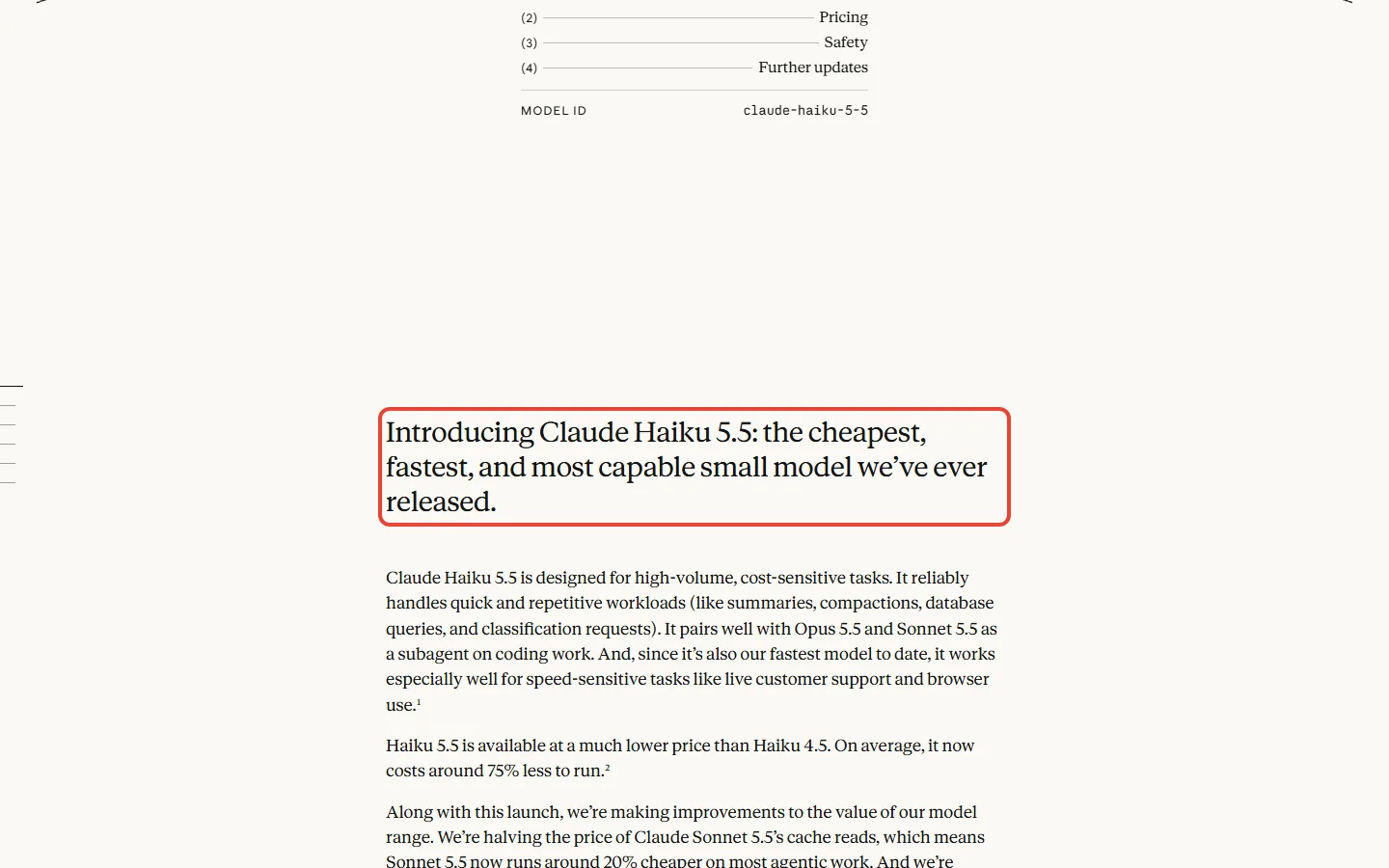
Anthropic’s launch page calls Haiku 5.5 “the cheapest, fastest, and most capable small model we’ve ever released” and says it is designed for “high-volume, cost-sensitive tasks”, with examples such as summaries, compactions, database queries and classification requests. It also names speed-sensitive uses such as live customer support and browser use, and says it pairs with Opus 5.5 and Sonnet 5.5 as a subagent on coding work. Think of it as the quick, cheap assistant in the family: the one you send repetitive jobs to, not the one you ask to design a system.
Anthropic says it is its first Haiku-class model with an adjustable effort setting, which lets you trade cost against intelligence. In Claude chat, Anthropic’s help center says you pick it from the model menu next to the send button, change the effort level at any point in a conversation, and cannot turn thinking off with Haiku 5.5. Web search works with it. Anthropic also says Haiku 5.5 uses an updated tokenizer, so it “uses slightly more tokens per task”, and that its safeguards still block penetration testing and other techniques more likely to be used by attackers.
🔑 Who Gets Claude Haiku 5.5, and on Which Plan?
Anthropic’s pricing page has a “Models and usage” table that lists Haiku as available on Free, Pro, Max 5x and Max 20x. Sonnet is available on every plan, and Opus is not on Free. Pro is $20 a month billed monthly ($17 a month on the annual plan, $200 up front), and Max starts at $100 a month with a choice of 5x or 20x more usage than Pro. On paid plans (Pro, Max, Team and Enterprise) the chat context window for Haiku 5.5 is 1 million tokens, the same as Sonnet 5.5 and Opus 5.5. In Claude Cowork it is 500,000 tokens. Anthropic’s help page does not state the Free plan’s context size.
| Plan | Price | Haiku 5.5 in chat | Chat context window | Monthly API credit |
|---|---|---|---|---|
| Free | $0 | Listed as available | Not stated | Not eligible |
| Pro | $20 monthly ($17 annual) | Listed as available | 1M tokens | Not eligible |
| Max 5x | $100 | Listed as available | 1M tokens | $100 |
| Max 20x | $200 | Listed as available | 1M tokens | $200 |
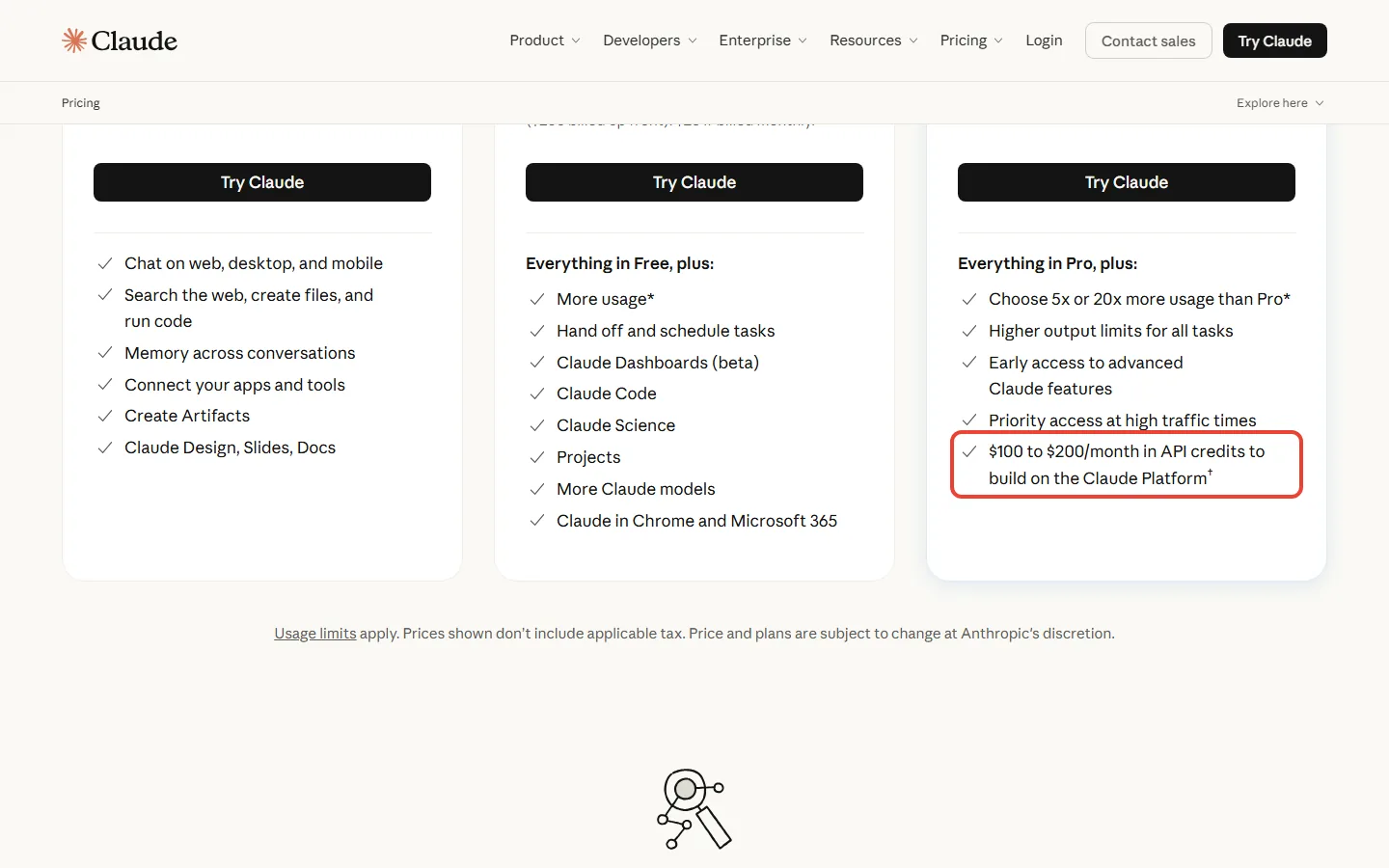
One caution: this is Anthropic’s table, and it can change. Anthropic says on its pricing page that “price and plans are subject to change at Anthropic’s discretion”, so check the live page before you rely on it. For the broader plan picture, see our Claude AI review and the Opus 5.5 vs Sonnet 5.5 comparison.
💰 Claude Haiku 5.5 API Price
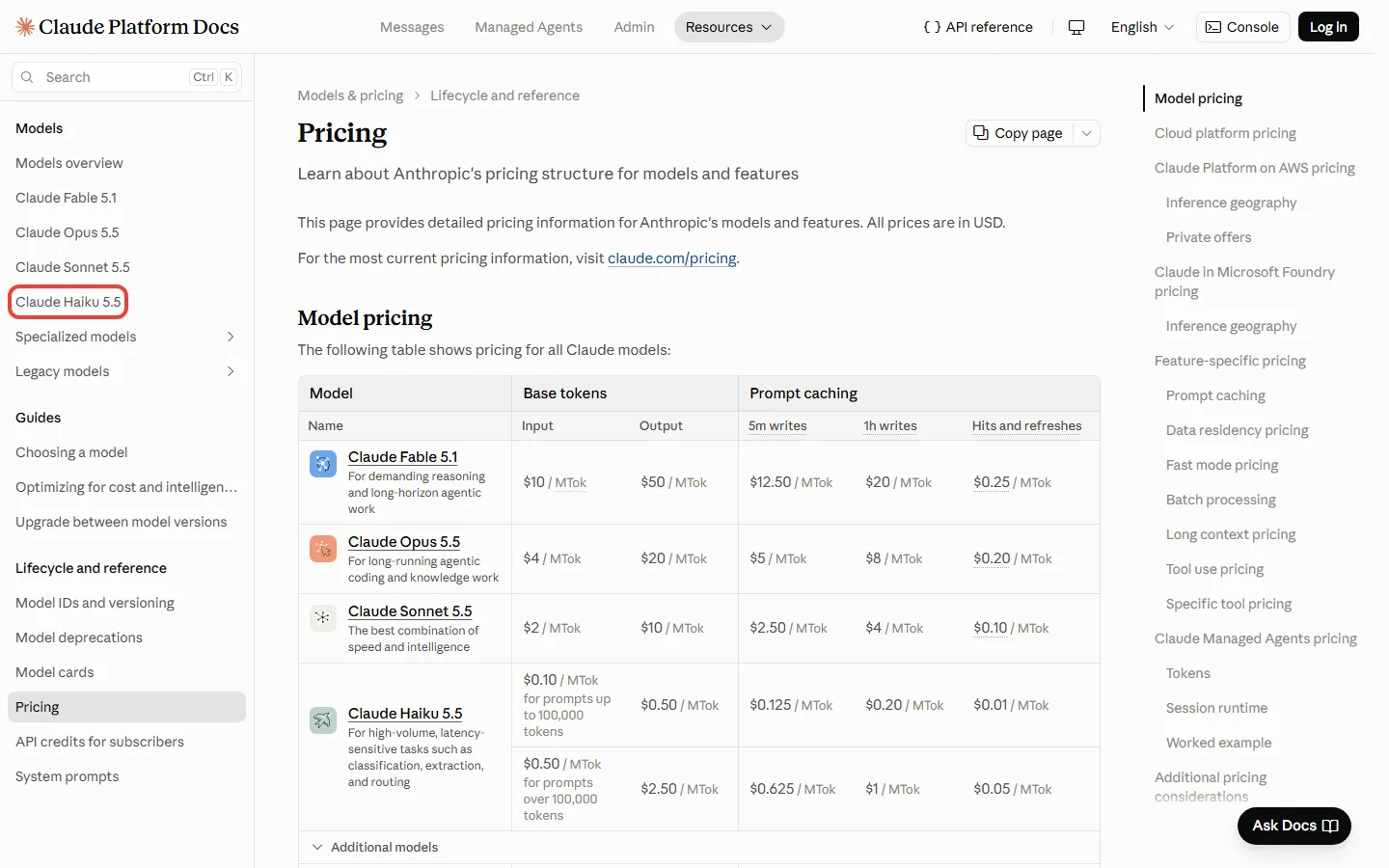
For developers, Anthropic lists Haiku 5.5 at $0.10 per million input tokens and $0.50 per million output tokens for prompts up to 100,000 tokens, and $0.50 and $2.50 above that. Cache reads are $0.01 (or $0.05 above 100,000) and 5-minute cache writes $0.125 (or $0.625). Anthropic’s pricing page explains the line: a request’s prompt length counts all of its input tokens, including cache reads and cache writes, and each request is priced on its own, so a request over the threshold pays the higher price even if part of its prompt is cached. Here is how that compares with its siblings, per million tokens:
| Model | Input | Output | Relative to Haiku 5.5 |
|---|---|---|---|
| Claude Haiku 5.5 (prompts up to 100k tokens) | $0.10 | $0.50 | 1x |
| Claude Haiku 4.5 | $1 | $5 | 10x |
| Claude Sonnet 5.5 | $2 | $10 | 20x |
| Claude Opus 5.5 | $4 | $20 | 40x |
By our arithmetic, Haiku 5.5 is one twentieth of Sonnet 5.5’s per-token price and 90% cheaper than Haiku 4.5 up to 100,000 tokens. Anthropic’s own average for the saving over Haiku 4.5 is “around 75% less to run”, which accounts for the tokenizer using slightly more tokens. Long sessions can cross 100,000 tokens, and above that Haiku 5.5 is $0.50 and $2.50, so part of the advantage goes.
📊 API Price per Million Tokens (USD, Prompts up to 100k)
📈 How Far Behind Sonnet 5.5? Anthropic’s Own Table
These are vendor-reported numbers from Anthropic’s launch page, not independent results, and Anthropic chose the benchmarks. They show a clear gap on the harder rows:
| Benchmark (Anthropic’s table) | Haiku 5.5 | Sonnet 5.5 |
|---|---|---|
| OSWorld 2.1 (offline subset) | 72.4% | 83.9% |
| Terminal-Bench 4.0 | 39.2% | 70.6% |
| Humanity’s Last Exam, no tools | 45.9% | 56.9% |
| Humanity’s Last Exam, with tools | 57.4% | 64.5% |
| FrontierCode 1.1 (Sonnet at Xhigh) | 46.4% | 52.1% |
| GDPval-AA v2.1 | 1620 | 1840 |
🔍 REALITY CHECK
Marketing Claims: “The cheapest, fastest, and most capable small model we’ve ever released.”
What It Really Means: “Small model” is the qualifier. On Terminal-Bench 4.0, Anthropic’s own table has Haiku 5.5 at 39.2% against Sonnet 5.5’s 70.6%, a gap of about 31 points by our arithmetic, and Anthropic says Sonnet and Opus “remain better choices for complex agentic coding tasks”.
Verdict: Haiku 5.5 is a good deal for narrow, repetitive work, and not a cheaper way to do hard work.
That is also how Anthropic’s own guidance reads. Its Claude Code help article says Opus costs several times more per turn than Sonnet, and Sonnet more than Haiku, and suggests Haiku “for quick mechanical work (renames, log lines, regex explanations, boilerplate)”. You can run it in Claude Code with claude --model claude-haiku-5-5. If you are weighing a cheaper-model setup, our Claude Code Router review compares Haiku 5.5’s price with DeepSeek’s.
🎁 The Max Monthly API Credit: Free Money or a Trap?
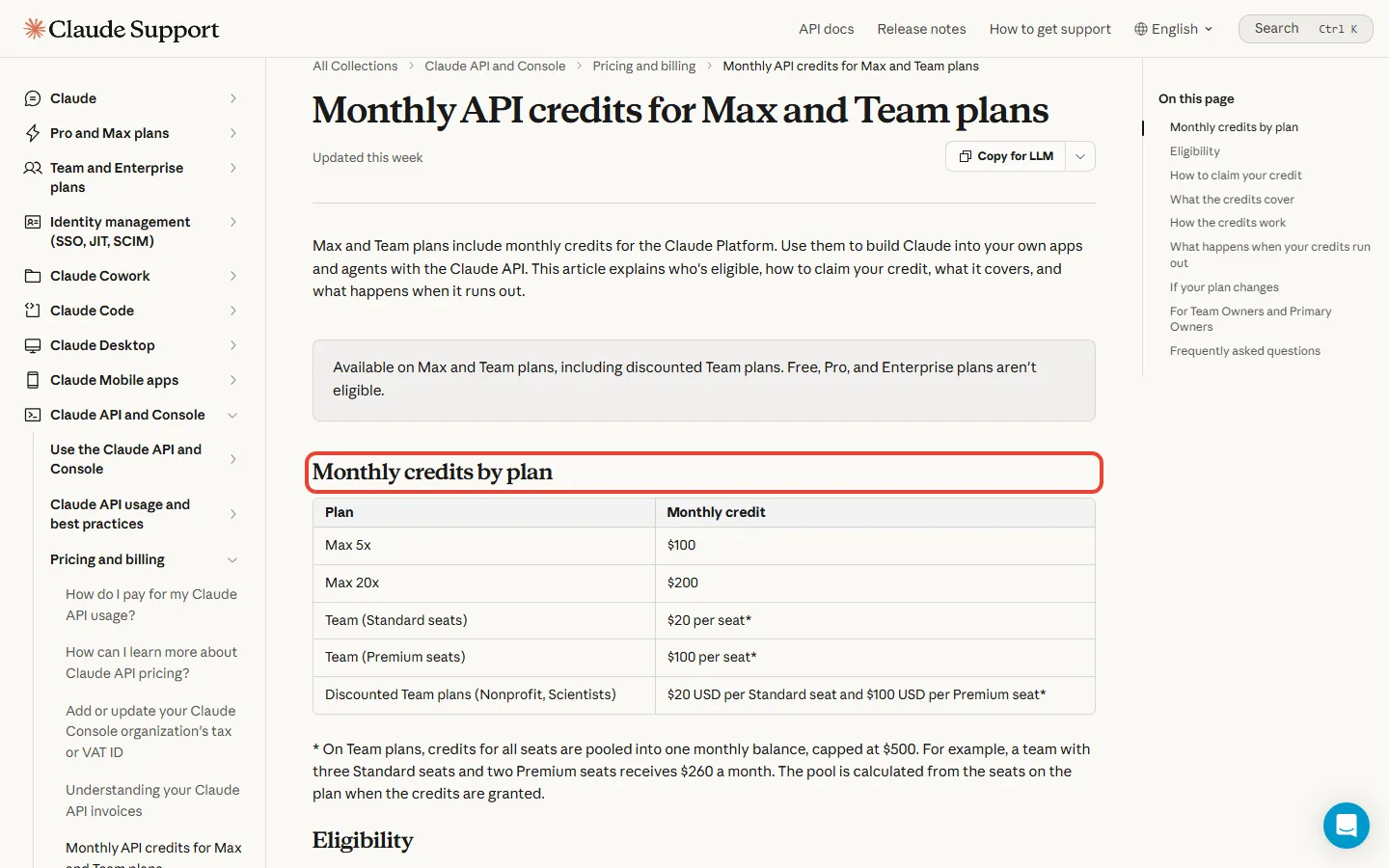
The same week as Haiku 5.5, Anthropic added monthly API credits to Max and Team plans. Its help article lists the amounts:
| Plan | Monthly API credit |
|---|---|
| Max 5x | $100 |
| Max 20x | $200 |
| Team, Standard seats | $20 per seat (pooled, capped at $500) |
| Team, Premium seats | $100 per seat (pooled, capped at $500) |
So the credit equals the plan price in dollars, by our arithmetic: $100 for Max 5x and $200 for Max 20x. Free, Pro and Enterprise plans are not eligible, and Anthropic’s help article says it is rolling the credits out over a few days, so you may not see the offer on your account yet. The credit comes with conditions that decide whether it is useful:
- You have to claim it. On claude.ai go to Settings, then Billing, and link a Claude Console organization. New subscribers can claim after seven days on the plan, and you can link only one Console organization, which you cannot change yourself.
- It is for building, not for Claude Code. It covers the Claude API, the Console Playground, Claude Managed Agents and the Agent SDK. It does not cover interactive Claude Code in the terminal, IDE, desktop or web, extra usage in Claude, or Claude on Amazon Bedrock, Google Cloud Vertex AI or Microsoft Foundry.
- It expires. Credits refresh each billing cycle and do not roll over. When they run out and your Console organization has no purchased credits or auto-reload, API requests stop until the next batch. Usage is never charged to your Claude plan.
- It does not change your plan limits. The credits are separate from your usage limits in Claude, Claude Code and Cowork.
What does $100 buy on Haiku 5.5? At list price for prompts up to 100,000 tokens, by our arithmetic, up to about 1 billion input tokens or 200 million output tokens before caching. That is an illustrative ceiling, not a forecast, since real jobs mix input and output and Haiku 5.5 uses slightly more tokens per task.
💡 Key Takeaway: The credit is worth claiming only if you build with the API. If you use Max mostly for Claude and Claude Code, treat it as a bonus you may never spend.
📬 Enjoying this breakdown?
Get honest AI tool analysis delivered weekly. No hype, no spam.
🎯 Which Claude Model Should You Pick?

Use Haiku 5.5 when: the job is quick and low stakes (summaries, renaming, boilerplate, classification), you want speed, or you are running many small calls on the API where price per token matters.
Use Sonnet 5.5 when: you want one everyday model for chat and coding. Anthropic’s pricing table lists Sonnet on every plan.
Use Opus 5.5 when: the work is complex and you are on a plan that includes it. Opus is not on the Free plan.
Skip Haiku 5.5 for: complex agentic coding, security testing (its safeguards block penetration testing), and anything where a wrong answer is expensive.
❓ FAQs: Your Questions Answered
Q: What is Claude Haiku 5.5?
A: It is Anthropic’s newest small model, launched on October 7, 2026 and described as “the cheapest, fastest, and most capable small model we’ve ever released”. It is designed for high-volume, cost-sensitive tasks.
Q: Is Claude Haiku 5.5 free?
A: Anthropic’s pricing page lists Haiku as available on the Free plan, subject to the plan’s usage limits. On the API it is paid: $0.10 input and $0.50 output per million tokens for prompts up to 100,000 tokens.
Q: How much does Claude Haiku 5.5 cost?
A: In chat there is no extra price: it comes with your plan (Free, Pro at $20 a month, Max from $100). On the API it costs $0.10 and $0.50 per million input and output tokens, and $0.50 and $2.50 above 100,000 prompt tokens.
Q: Is Haiku 5.5 better than Sonnet 5.5?
A: No. Anthropic’s own table has Sonnet 5.5 ahead on every benchmark it lists, and Anthropic says Sonnet and Opus remain better choices for complex agentic coding. Haiku 5.5 is cheaper, and Anthropic says it is its fastest model at standard speed.
Q: What is the Claude Max API credit?
A: A monthly credit for the Claude API: $100 on Max 5x and $200 on Max 20x. You claim it by linking a Console organization, it expires each billing cycle, and it does not cover Claude Code.
Q: Can I use Haiku 5.5 in Claude Code?
A: Yes: run claude --model claude-haiku-5-5. Anthropic’s guide suggests Haiku for quick mechanical work, and the Max API credit does not apply to Claude Code.
Q: How big is Haiku 5.5’s context window?
A: 1 million tokens in chat on paid plans (Pro, Max, Team and Enterprise), and 500,000 in Claude Cowork. Anthropic’s page does not state the Free plan’s size.
Q: Where is Haiku 5.5 available?
A: Anthropic says it is available on all platforms, including Amazon Web Services, Google Cloud and Microsoft Azure, as well as on its own apps and API.
Final Verdict: DEPENDS
For most people who pay for Claude, Haiku 5.5 changes little: your plan price is flat, Sonnet 5.5 stays the sensible everyday model, and Haiku is a fast option for easy jobs. For builders it is a bigger deal. A model at one twentieth of Sonnet’s per-token price, plus a $100 or $200 monthly API credit on Max, is the cheapest way Anthropic has offered to start building. The limit is the one Anthropic states itself: for complex agentic coding, Sonnet and Opus remain the better choices.
Verdict: DEPENDS. Chat user: try Haiku 5.5 for quick low-stakes jobs and keep Sonnet 5.5 as the default. Builder or Max subscriber who uses the API: claim the credit and start with Haiku 5.5. Check Anthropic’s launch page for current prices.

Founder of AI Tool Analysis. Reads every pricing page, help article and footnote so you don’t have to. Covering AI tools since 2025. See how we research →
Related Reading
- Claude Opus 5.5 vs Sonnet 5.5
- Claude AI Review
- Claude Code Router Review
- Claude Code vs Cursor
- Goose AI Review
- Claude Code Plugins Review
- ChatGPT Review
- Free AI Tools 2026
Stay Updated on Claude and AI Plans
AI plans and models change every few weeks. Get the changes that affect what you pay, straight from the vendors’ own pages.
- ✅ Honest Breakdowns: We read the pricing pages and help centers, not press releases
- ✅ Price Tracking: Know when plans change price or limits
- ✅ Comparison Updates: As the market shifts, we update our verdicts
- ✅ No Hype: Just the AI news that matters for your wallet
Free, unsubscribe anytime.

Last Updated: October 10, 2026
Model Covered: Claude Haiku 5.5 (model ID claude-haiku-5-5), launched October 7, 2026
Next Review Update: November 10, 2026
Have a tool you want us to cover? Suggest it here | Questions? Contact us