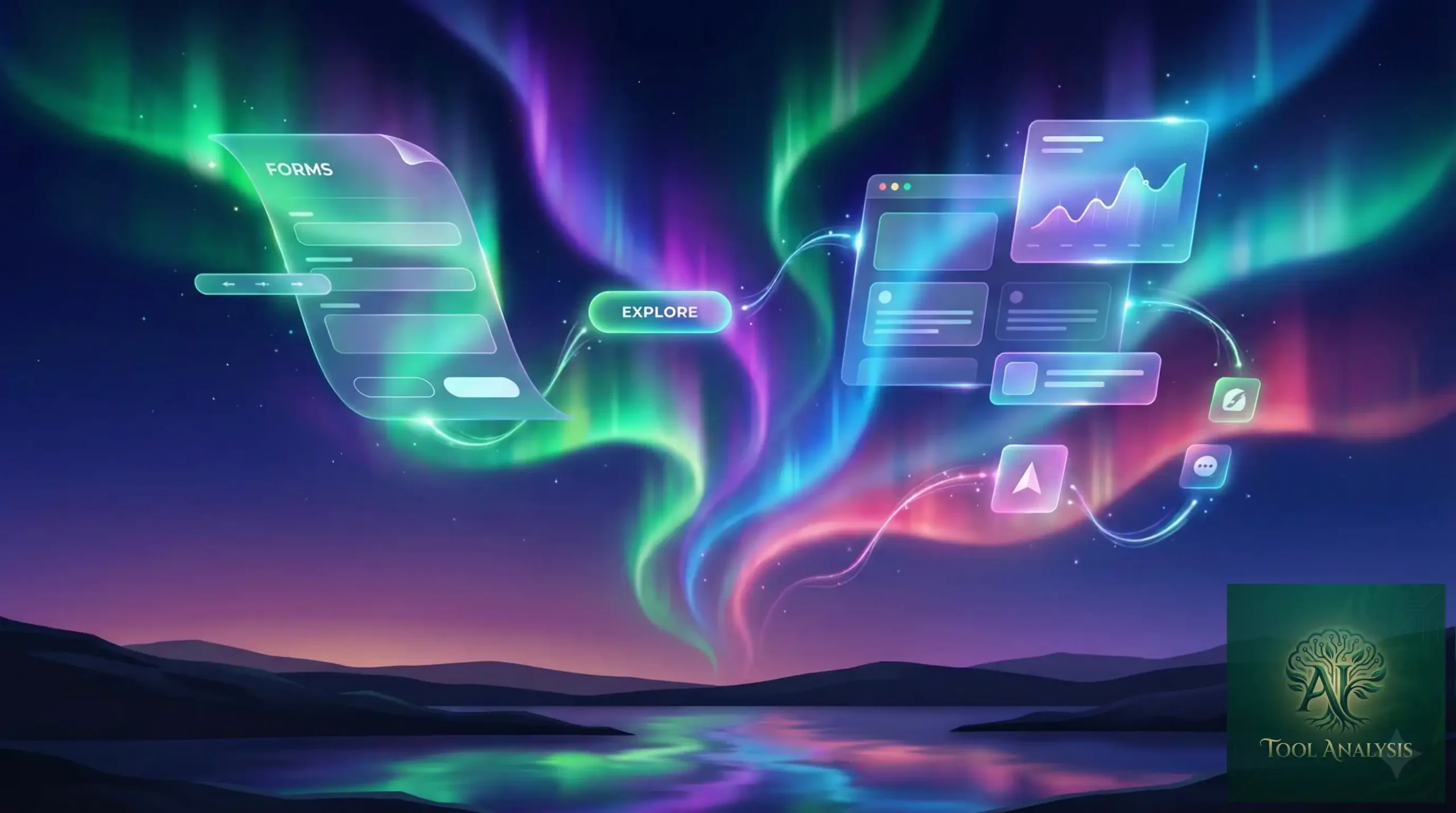
What is A2UI? It is Google’s open protocol that lets an AI agent describe a user interface as data, so that your app can draw the form, table or chart natively. This Google A2UI review is for developers and the people who decide whether to build on it. Nine months after our first look, the question is no longer “does anything official exist” but “is it stable enough to bet a product on”, and the honest answer is not yet. Below: what changed, how it works, what it costs (the protocol is free, the models and hosting are not), how it relates to MCP Apps and AG-UI, and where it is still rough.
⚡ TL;DR: The Bottom Line
What It Is: An open, Apache-2.0 protocol from Google (with contributions from CopilotKit and the community) for agents to send declarative UI that a client renders with its own components.
Best For: Developers building agent apps who want the agent to draw forms and views without the agent running code on the client.
Price: $0 for A2UI itself. You pay for the model (the Gemini API has a free tier for several models) and for hosting.
Our Take: Real momentum and now real docs, but a moving target: breaking releases landed on October 8, and the v1.0 spec is still a candidate.
⚠️ The Catch: The README says “Expect changes” and GitHub shows no “Used by” list. Pin versions and plan for migrations.
📑 Quick Navigation
🤖 What Is A2UI?
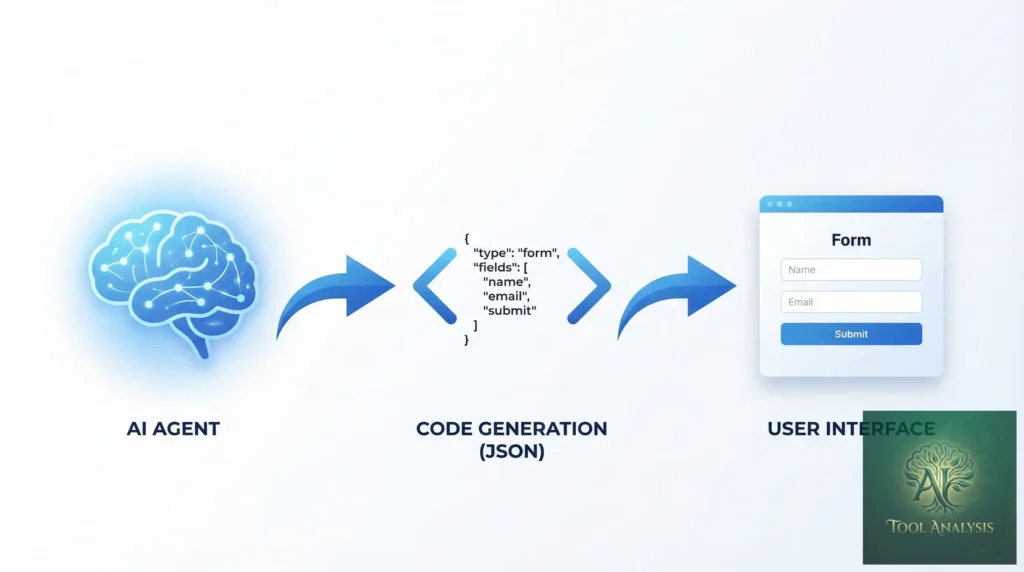
A2UI is commonly read as Agent-to-User Interface, as in our January version, though Google’s pages do not spell it out. Google’s a2ui.org describes it as a protocol that lets agents “generate rich, interactive user interfaces that render natively across web, mobile, and desktop”. The agent does not send code. It sends a description of the interface, and your app turns that into its own buttons, inputs and layouts. If you searched for “ai2ui” or “a2ui google”, this is the project.
Think of it like ordering from a menu instead of dictating a recipe: the agent picks components from a catalog your app already approved, and your app cooks them in its own style. That is also the security argument. The project says A2UI is a “declarative data format, not executable code”, and that agents can only use pre-approved components from your catalog.
A2UI on GitHub: the repo, stars and release state
The A2UI GitHub project, a2ui-project/a2ui (google/A2UI now redirects there), shows 16.7k stars, 1.3k forks, 345 open issues and 102 open pull requests on October 10, 2026, under the Apache-2.0 license. The README calls it an “early stage public preview” and tells readers to “expect changes”. The current production release is v0.9.1, a patch inside the stable v0.9 family. The v1.0 spec is a release candidate, and v0.8 is legacy. That is a big step from the “no official SDK” picture in our January version, with one catch: GitHub shows no “Used by” list for the repository, so there is no list of named production adopters to point to.
🔍 REALITY CHECK
Marketing Claims: A2UI is “a framework-agnostic standard for declaring UI intent”, in Google’s v0.9 announcement.
What It Really Means: The spec is portable, but the work still lives in renderers and agent code. Official renderers exist for Flutter, Lit, Angular and React, and a Python agent SDK exists. Go and Kotlin SDKs were listed as “coming soon” in the April post.
Verdict: Good news for web and Flutter teams, and a wait for anyone who needs another stack.
⚙️ How A2UI Works
The flow has three parts. The agent (for example a Gemini-powered agent built with Google’s Agent Development Kit) decides what interface the user needs and emits an A2UI message. A transport carries it: v0.9 supports MCP, WebSockets, REST, AG-UI and A2A. A renderer in your app, using your component catalog, draws it, and user actions flow back to the agent. v0.9, published on April 17, 2026, added client-defined functions, client-to-server data syncing, improved error handling and a modular schema. It also renamed the optional component set from “Standard” to “Basic”.
The version table on a2ui.org shows where it is heading. v0.9.1 standardizes the application/a2ui+json MIME type, and the v1.0 candidate adds a client-to-server RPC (actionResponse), action IDs and a rename of theme to surfaceProperties. If you built on v0.8 you will need to migrate: InfoQ reports a move to a prompt-first schema, modular files and renamed properties.
🚀 Getting Started (Official Quickstart)
a2ui.org highlights three ways in. The quickest is the full-stack Restaurant Finder demo, which pairs a Gemini-powered ADK agent with a Lit renderer. The second is CopilotKit with AG-UI, which the quickstart says adds A2UI to an existing agent built with ADK, LangGraph, CrewAI, Mastra or a custom service. The third is the A2UI Composer: generate A2UI JSON visually, then paste it into an agent prompt. For the agent side in Python, the v0.9 post says to install the SDK with pip install a2ui-agent-sdk.
A2UI React: the official renderer
The A2UI React renderer is new in v0.9: Google’s post says “We’ve also landed the official React renderer” alongside version bumps for Flutter, Lit and Angular, and it introduced a shared web-core library to simplify browser renderers. In our January version React was a community project. If you are on React or Next.js, check the repository’s renderer directory for the current package name.
💡 Key Takeaway: Start with the Restaurant Finder demo to see the full loop in an hour, then pin the exact versions of the renderer and SDK you use. Core packages shipped breaking changes on October 8.
✨ Features That Matter
- Your components, not the agent’s. The agent can only reach for components in a catalog you define, so the interface keeps your styling and your rules.
- Streaming and updates. The format is built for UIs that update as the agent works, and the Python SDK handles incremental parsing of partial model output.
- Transport choice. It runs over MCP, WebSockets, REST, AG-UI and A2A, so it can ride on the agent plumbing you already have.
- Client-defined functions. v0.9 lets the client define functions, for example for validation, so checks can run in your app instead of in the model.
- Several official renderers. Flutter, Lit, Angular and React are covered in the April release, with a separate Flutter GenUI SDK that builds on A2UI.
💼 What People Are Building
The official demos give the clearest picture: a restaurant finder, and, per a2ui.org, a landscape architect app that uses Gemini with a custom Google Maps component. The v0.9 post adds a Personal Health Companion and a Life Goal Simulator built by outside teams (Rebel App Studio and Codemate, and Very Good Ventures). The post also names AG2, Vercel (a json-renderer proof of concept), Oracle (Agent Spec support) and CopilotKit. These are demos and integrations, not proof of production use. Forms that an agent fills in, comparison tables and approval screens are the natural fits, because they are structured and repeatable.
💰 Pricing: What A2UI Really Costs
Is A2UI free? Yes. The spec and the renderers are Apache-2.0 open source, so there is no license fee. The costs are the model that powers your agent and the hosting for your app. If you use Google’s models, the Gemini API pricing page lists a free tier for several models, and these paid prices per million tokens on October 10, 2026:
| Item | Cost | Notes |
|---|---|---|
| A2UI protocol and renderers | $0 | Apache-2.0 |
| Gemini 2.5 Flash-Lite | $0.10 input / $0.40 output | Cheapest text-generation model listed; free tier available |
| Gemini 3.1 Flash-Lite | $0.25 input / $1.50 output | Text, image and video input rates |
| Gemini 3.8 Flash | $0.75 input / $3.75 output (introductory, through December 31, 2026) | Newest Flash listed; Google lists $1.50 / $7.50 from January 1, 2027 |
| Your hosting | Varies | Depends on your platform |
A2UI works with other models too, since it is a data format: any model that can follow the schema can produce it. The prices above only matter if you pick Gemini. The Gemini price range in our January version no longer matches Google’s page, so ignore it.
📊 Gemini API Output Price per Million Tokens (USD)
⚠️ Limitations and Gotchas
- It is a moving target. The README says “expect changes”. The project’s releases page shows a2ui-core 0.3.0 and a2ui-agent-sdk 0.8.0 on October 8 with breaking changes (a changed
DataContextvalidation order, a removedA2uiCatalogand a removed strict-validation option), after 0.2.0 and 0.7.0 on September 28. - v1.0 is not final. The spec is a release candidate, and the table on a2ui.org notes changes still coming.
- Not every SDK is there. The Python SDK exists. Go and Kotlin were “coming soon” in April. No Go or Kotlin agent SDK appears in the release list, and the repo holds only a legacy Kotlin folder.
- No named production adopters. GitHub shows no “Used by” list, and the named partners in Google’s post are demos and integrations.
- Trust and UX questions remain. InfoQ’s July report cites comments on Hacker News and Reddit asking why anyone would trust a model to output a UI and warning that every interface could look the same. Fixed catalogs and validation, which A2UI supports, are the usual answer.
👤 Who Should Use A2UI (and Who Shouldn’t)
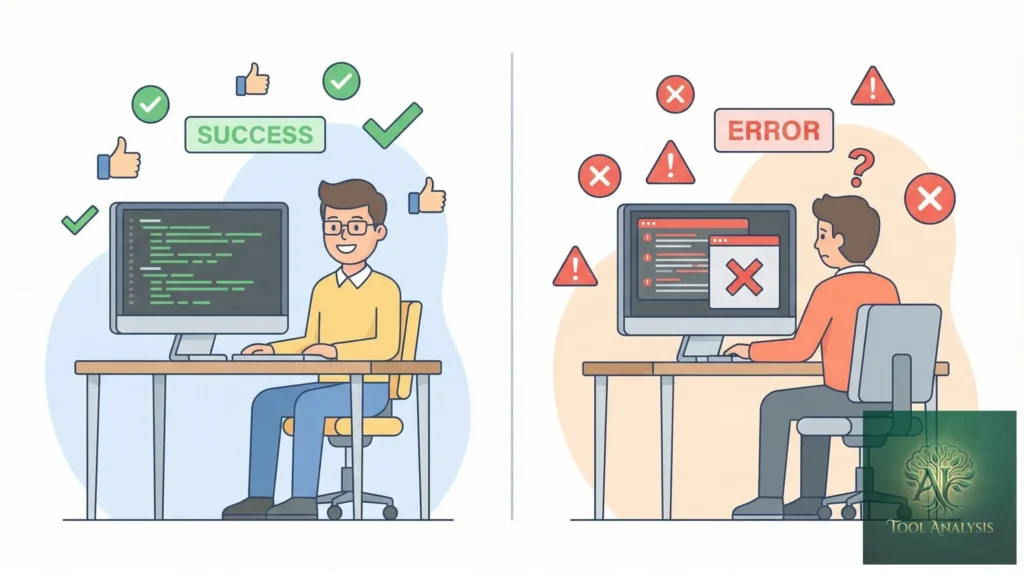
Use A2UI if: you are building an agent app on web or Flutter, you already run (or plan to run) an agent framework such as ADK, AG-UI or A2A, and you can absorb breaking changes while the spec settles.
Wait if: you need a stable v1.0 and a long support window, your stack is Go or Kotlin on the server, or you want a ready-made product rather than a protocol. A2UI is a toolkit for developers, not a consumer app.
📬 Enjoying this breakdown?
Get honest AI tool analysis delivered weekly. No hype, no spam.
🗣️ Ecosystem and Community
Community activity is now official enough to count: the v0.9 post carved out a dedicated spot for community renderers, and CopilotKit, which maintains AG-UI, is credited as a contributor on a2ui.org. The older figures from our January version (about 15 community repositories with 0 to 4 stars each) are no longer a useful measure, and we have removed them. For sentiment, InfoQ’s July report quotes a CopilotKit executive (CopilotKit contributes to A2UI) calling v0.9 a big improvement, and individual commenters asking whether a model should be trusted to build interfaces. Treat both as anecdotes.
🔄 A2UI vs MCP Apps vs AG-UI
The neighbours are layers, not rivals, according to a2ui.org’s own comparison page:
| Criteria | A2UI | MCP Apps | AG-UI |
|---|---|---|---|
| What it is | A declarative UI format | Pre-built HTML served via ui:// URIs | A transport between agent backend and frontend |
| Who controls the look | The host app (styling, theming, rendering) | The server (content and appearance) | The developer, who builds the frontend |
| Runs in | Your native components | A sandboxed iframe | Not a UI format |
| How they fit | Carried over AG-UI, A2A or MCP | Bridge planned so MCP servers can supply A2UI blueprints | The pipe for A2UI content |
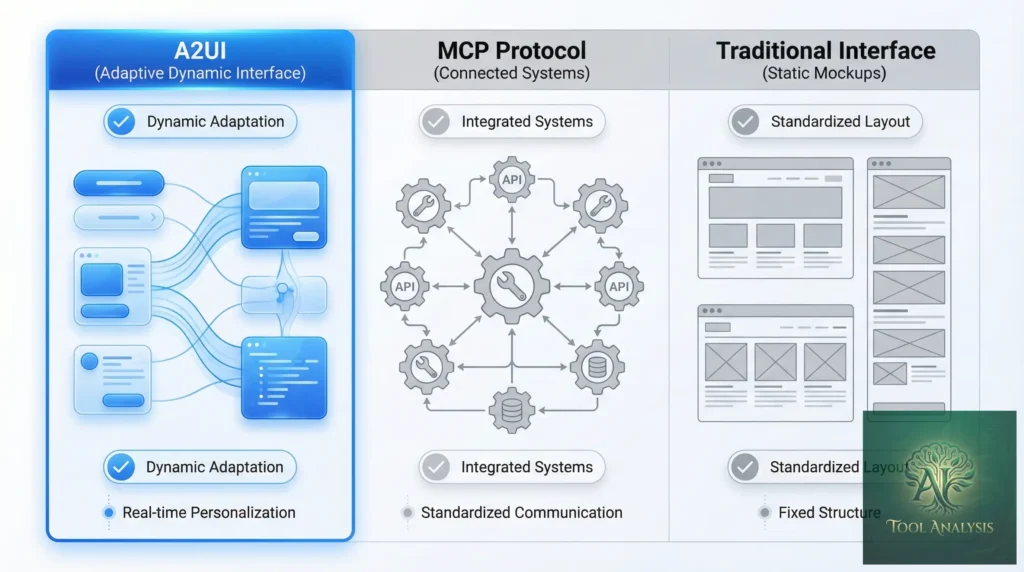
Note that AG-UI is maintained by CopilotKit, which also contributes to A2UI, so its comparisons are not fully independent. Our January comparison against “traditional UIs” is gone because it compared a protocol with a design approach. For where the model-to-tool side sits, see our AI agents for developers guide and the Claude Code plugins review for how MCP shows up in practice.
❓ FAQs: Your Questions Answered
Q: What is A2UI?
A: A2UI is Google’s open protocol (commonly read as Agent-to-User Interface) that lets an AI agent describe an interface as declarative data so a client app can render it with its own native components.
Q: Is Google A2UI free?
A: Yes. The spec and renderers are Apache-2.0. You pay for the model and hosting, and the Gemini API has a free tier for several models.
Q: How much does it cost to run?
A: A2UI adds nothing. On Gemini, paid prices run from $0.10 input and $0.40 output per million tokens on Gemini 2.5 Flash-Lite to $0.75 and $3.75 on Gemini 3.8 Flash (an introductory rate through December 31, 2026).
Q: Is A2UI production-ready?
A: Not by the project’s own label. The README calls it an early-stage public preview and says to expect changes. v0.9.1 is the current production release, and v1.0 is a release candidate.
Q: Does A2UI work with React?
A: Yes. v0.9 added an official React renderer alongside Flutter, Lit and Angular. CopilotKit also offers a starter template for A2UI.
Q: Can A2UI work with models other than Gemini?
A: It is a data format, so any model that can produce the schema can drive it. Google’s quickstart uses a Gemini agent built with ADK, and v0.9 lists AG2 and any agent that speaks AG-UI as other routes.
Q: How is A2UI different from MCP Apps?
A: With MCP Apps the server serves finished HTML in a sandboxed iframe and controls how it looks. With A2UI the host app controls the styling and renders the components itself.
Q: Where is the official A2UI documentation?
A: At a2ui.org, with the code at github.com/a2ui-project/a2ui. Our January version said no official hub existed, which is no longer true.
Final Verdict: Is A2UI Worth Building On?
A2UI has moved from a promising idea with scattered community code to an official, documented project with a stable-ish v0.9 spec, four official renderers and a Python SDK. The case for it is the clean security model (a catalog of approved components, no executable code) and Google’s backing. The case against, for now, is churn: breaking releases on October 8, a v1.0 candidate that is not final, and no listed production adopters.
Build on A2UI if: you are prototyping agent apps on web or Flutter and can pin versions and migrate. Start with the Restaurant Finder demo.
Wait for v1.0 if: you need long-term stability or an SDK in a language that is still “coming soon”. Check a2ui.org for the current version table before you commit.

Founder of AI Tool Analysis. Reads every pricing page, help article and footnote so you don’t have to. Covering AI tools since 2025. See how we research →
Related Reading
- Top AI Agents for Developers 2026
- Claude Code Plugins Review 2026
- Google Antigravity Review
- Claude Code Router Review
- Google Gemini Review
- Goose AI Review
Stay Updated on AI Developer Tools
Developer tools change weekly. Get the releases and price changes that affect what you build, straight from the vendors’ own pages.
- ✅ Honest Breakdowns: We read the docs and release notes, not press releases
- ✅ Price Tracking: Know when API prices and free tiers change
- ✅ Comparison Updates: As the market shifts, we update our verdicts
- ✅ No Hype: Just the news that actually matters for your stack
Free, unsubscribe anytime.

Last Updated: October 10, 2026
A2UI Version Covered: v0.9.1 (current production release); v1.0 release candidate
Next Review Update: November 10, 2026
Have a tool you want us to cover? Suggest it here | Questions? Contact us