
📅 Post Updated: February 14, 2026
Major update: Expanded from 7 to 10 tools (added GitHub Copilot Free, Microsoft Copilot, and coding tools). Corrected Google AI Studio limits (80% cut in Dec 2025), updated ChatGPT Free (now shows ads, has GPT-5.2 access + image generation), and Claude Free (massive Feb 2026 expansion). All tool limits verified for 2026. Original review published October 2025.
Reading time: 12 minutes | Last tested: February 2026
The Bottom Line Up Front
Most “free” AI tools are glorified demos that lock everything useful behind a paywall. After spending three weeks testing 30+ free AI tools, I found 10 that deliver genuine value without constant upgrade nags. These tools actually work for real projects, not just toy examples.
What you’re getting: A complete AI toolkit for $0/month that handles writing, image creation, voice work, research, coding, and design. The catch? Usage limits exist, and one of them now shows you ads. But for most people doing regular (not industrial) work, these limits won’t matter.
The big shift since 2025: Free tiers got both better and worse simultaneously. Claude added file creation and app connectors for free. ChatGPT added image generation for free — but also added ads. Google slashed AI Studio’s free API limits by 80%. And GitHub Copilot now gives developers 2,000 free code completions monthly. The landscape is messier, but the actual tools are more powerful than ever.
⚡ TL;DR — Free AI Tools Review (February 2026)
- What It Is: A complete AI toolkit for $0/month covering writing, image creation, voice work, research, coding, and design — 10 tools that deliver genuine value without constant upgrade nags.
- What’s New: ChatGPT added ads + image generation for free, Claude massively expanded with file creation and Projects, Google AI Studio cut free limits by 80%, GitHub Copilot Free launched with 2,000 monthly code completions, and Canva acquired the Affinity design suite.
- Best For: Hobbyists, students, freelancers, and anyone not running an AI-dependent business who wants professional-quality AI output without subscriptions.
- Key Strength: Combined free tiers now cover ~80-100 daily AI messages, 18-30 images, coding assistance, voice cloning, professional design, and deep research — all for $0.
- Current Issues: ChatGPT now shows ads on free tier, Google AI Studio slashed limits by 80%, free tiers add ~15-20% more time to projects, and limits can tighten without warning.
- Verdict: The 2026 free AI toolkit is messier but more powerful than ever. Start with Claude Free (best overall free tier, no ads) plus one tool matching your primary need, and upgrade only what you hit limits on repeatedly.
📑 Quick Navigation
What Changed Since 2025
Seven things that changed the free AI toolkit since our original review:
- ChatGPT Free now shows ads (Feb 2026) — OpenAI began displaying ads at the bottom of responses for free users in the US. The trade-off: you also get GPT-5.2 access and 3 free image generations daily.
- Claude Free massively expanded (Feb 2026) — Anthropic added file creation (Excel, PowerPoint, Word, PDF), Projects, app connectors, and compaction. Explicitly positioned as “the ad-free alternative.”
- Google AI Studio free tier cut 80% (Dec 2025) — Those 1,500 daily queries we praised? Gone. Now you get ~25-50/day depending on model. Still free, still no credit card, but dramatically less generous.
- GitHub Copilot Free launched — 2,000 code completions and 50 chat messages monthly. This single addition makes the free coding toolkit legitimately competitive.
- New ChatGPT Go tier ($8/month) — A budget option between free and Plus, filling the gap for users who want fewer limits without paying $20/month.
- Canva acquired Affinity — The professional Affinity design suite (photo editor, vector designer, page layout) is now free for all Canva users. That’s a massive upgrade.
- Perplexity Pro searches dropped — From 5 daily Pro searches to 3. But they added 3 daily Deep Research queries, which are actually more useful for complex questions.
What Actually Makes a Free Tool Worth Using
My filter is simple: A free tier “doesn’t suck” when you can complete an actual project without upgrading. Not a demo. Not a trial. A real, finished piece of work.
Test I ran: Could I create a complete marketing campaign (blog post, social images, voiceover, presentation) using only free AI tools? And this time I added a coding component: build a simple landing page. Spoiler: Yes, and the 2026 toolkit did it faster than the 2025 version despite having tighter limits on some tools.
The Tools That Made the Cut (And Why Most Didn’t)
Testing methodology: I tried completing six real tasks with each tool:
- Write a 1,000-word blog post
- Create three social media images
- Research a competitor
- Generate a 2-minute voiceover
- Code a simple web component
- Build a landing page with AI coding assistance
Passed: 10 tools completed at least 3 tasks without hitting paywalls mid-project.
Failed: 20+ tools either crashed at limits immediately, produced unusable quality on free tier, slapped watermarks on everything, or required a credit card to “start free.”
The Automatic Disqualifiers
Some tools market themselves as “free” but here’s what I found:
- Jasper AI Free: 7-day trial, then $49/month. That’s not free, that’s a trap. Read our detailed Jasper AI analysis to see why the pricing model is problematic.
- Midjourney: No free tier whatsoever. Free trials suspended since April 2023. Starts at $8/month.
- Copy.ai Free: 2,000 words monthly sounds good until you realize one blog post eats that.
- Cursor Free: 50 premium requests/month is workable for light use, but the 2,000 completions cap means serious coders will burn through it fast. Worth mentioning, not worth a full section.
- Most AI Video Tools: Free = giant watermark or 720p quality from 2010. Check our comprehensive AI video editing tools comparison for better options.
ChatGPT Free: The Productivity Workhorse (Now With Ads)
What changed: A lot. OpenAI made GPT-4o available for free back in May 2025, and since then they’ve added limited GPT-5.2 access (~10 messages every 5 hours), native image generation (3 images/day), and — the elephant in the room — ads. As of February 2026, free users in the US see ads at the bottom of responses.
⚠️ THE AD SITUATION
OpenAI started showing ads to free and Go tier users in February 2026. Ads appear at the bottom of answers, not interrupting the conversation. They won’t be shown to minors. Plus, Pro, Business, and Enterprise tiers remain ad-free. Is it annoying? Mildly. Is it a dealbreaker? Not unless you’re philosophically opposed to ads funding your free AI access — which, honestly, is a pretty reasonable trade.
What I Actually Used It For This Week
Task 1: Writing product descriptions
- Input: “Write 5 product descriptions for minimalist desk lamps, 100 words each, focus on home office professionals”
- Time: 45 seconds
- Output quality: Usable immediately, minor tone adjustments needed
- Free tier limit: Hit after about 30 turns per hour
Task 2: Image generation (NEW for free tier)
- Input: “A minimalist product photo of a desk lamp, warm lighting, marble surface”
- Time: 15 seconds
- Output: Photorealistic, genuinely impressive for a free tool
- Limit: 3 images/day — use them wisely
Task 3: Email rewriting
- Input: My passive-aggressive draft to a late client
- Time: 5 seconds
- Output: Professional version that didn’t burn bridges
- Value: Possibly saved a client relationship
[newletter]
The Free Tier Reality
Hourly limits: Around 30 turns per hour, with limited GPT-5.2 access (~10 messages/5 hours before falling back to a lighter model). What’s included: Text, image uploads, web browsing, file analysis, image generation (3/day), GPT Store access. What’s missing: Ad-free experience, higher limits, DALL-E at scale, Canvas feature, priority access. New option: ChatGPT Go at $8/month removes some limits without the full $20/month Plus commitment.
Try ChatGPT Free – no credit card required.
Best For, Worst For
Crushing it for:
- Occasional writers (3-5 blog posts monthly)
- Students doing research
- Small business owners writing emails
- Quick image generation for social posts (3/day is enough for many)
Terrible for:
- Content mills pumping out 50 articles daily
- Anyone who finds ads in AI responses unacceptable
- Any business-critical application
Claude Free: When You Need Something Actually Smart (And Ad-Free)

Anthropic’s Claude is the tool I reach for when ChatGPT gives me generic garbage. The free tier includes Claude Sonnet 4.5 — their most balanced model that hits a sweet spot between speed and intelligence.
And in February 2026, Anthropic massively expanded what free users get — clearly timed to coincide with ChatGPT’s ad rollout. The message is obvious: “Come to Claude, we won’t show you ads.”
The February 2026 Expansion
Free Claude users now get:
- File creation: Generate Excel spreadsheets, PowerPoint presentations, Word documents, and PDFs directly in conversation. This used to be Pro-only.
- Projects: Persistent workspaces where you organize conversations and uploaded documents. Think of it as a mini-office for each client or topic.
- Connectors: Hook Claude into third-party apps. Not just chatting — actually doing things.
- Compaction: Longer conversations through automatic context summarization. Your chats don’t hit the wall as quickly.
Where Claude Actually Wins
Test: Complex analysis task I uploaded my messy project timeline (50-page document) and asked both to find scheduling conflicts.
- ChatGPT: Listed obvious conflicts, missed subtle dependencies
- Claude: Found 3 critical issues I hadn’t seen, explained the ripple effects
Time saved: Probably prevented a 2-week project delay
The Claude Difference
Claude thinks differently. Give it a half-baked idea and it asks clarifying questions instead of assuming. It’s like talking to a consultant instead of a yes-man.
Real example from yesterday:
- Me: “Help me write a landing page for my SaaS”
- ChatGPT: Immediately generates generic copy
- Claude: “What problem does your SaaS solve? Who’s the target user? What’s your unique angle?”
That questioning approach caught that I hadn’t defined my actual value prop.
Free Tier Limits
Messages: About 45-50 daily on Claude Sonnet 4.5. Context window: 200,000 tokens (roughly 150,000 words). Projects: 5 knowledge bases with uploaded documents. File creation: Excel, PowerPoint, Word, PDF — all included free. No ads: Anthropic has explicitly committed to keeping Claude ad-free.
What this means practically: Upload your entire company wiki, chat with it all month, and export deliverables as actual files — all without seeing a single ad.
Start using Claude for free today.
When to Use Claude Instead of ChatGPT
Switch to Claude when:
- Your task needs reasoning, not just pattern matching
- You’re working with long documents (Claude reads better)
- You need to generate actual file deliverables (Excel, PowerPoint, etc.)
- You want an ad-free experience
- ChatGPT gave you something that “feels wrong”
Google’s AI Studio: Still a Gem, But Less Generous

Nobody talks about AI Studio because it’s buried in Google’s product lineup. It’s still powerful and represents one of the best free AI tools for developers — but I need to correct something from our original review.
🔄 CORRECTION FROM ORIGINAL REVIEW
Our original review praised AI Studio’s “1,500 free queries daily with Gemini 1.5 Pro.” In December 2025, Google cut free tier API limits by approximately 80%. Google’s Logan Kilpatrick explained that the generous limits “were originally only supposed to be available for a single weekend” but “inadvertently lingered for several months.” Current limits: ~25 requests/day for Gemini 2.5 Pro, ~50/day for Flash. Still free, still no credit card — but dramatically different from what we originally reported.
What it actually is: Direct access to Google’s Gemini models — now the 2.5 and 3.0 family — with a free tier that’s still more generous than most competitors despite the cuts.
Why I Keep Coming Back to It
The killer feature: You get access to multiple Gemini models — 2.5 Pro (~25 requests/day), 2.5 Flash (~50/day), and Flash-Lite (~1,000/day) — all with a 1 million token context window. No credit card required. That context window alone makes it worth using for specific tasks.
What I built with it recently:
- Analyzed a 200-page PDF in a single request (try doing that on ChatGPT free)
- Image recognition tool for product photos (Flash-Lite handles batches well)
- Content moderation prototype (tested with Gemini 2.5 Flash)
Cost: $0
The Gemini 2.5 Flash model offers even more impressive capabilities worth exploring.
The Trade-off
AI Studio requires actual setup. You’re working in a developer environment, not a polished chat interface. And the reduced limits mean you can’t brute-force through hundreds of requests anymore.
Smart strategy for the new limits:
- Use Flash-Lite (~1,000/day) for simple tasks — classification, extraction, formatting
- Use Flash (~50/day) for moderate tasks — analysis, summarization, code review
- Save Pro (~25/day) for complex reasoning — multi-step analysis, document comparison
Getting Started (5-Minute Version)
- Visit aistudio.google.com
- Click “Get API key”
- Copy key, paste into their playground
- Start prompting
That’s it. No credit card, no trial countdown.
Best Use Cases
Perfect for:
- Developers testing before building
- Analyzing massive documents (1M token context window)
- Experimenting with different model tiers
- Anyone comfortable with basic API concepts
Skip it if:
- You just want a simple chat interface (use Gemini at gemini.google.com instead)
- The word “API” makes you nervous
- You need hundreds of daily requests (those days are over for free tier)
GitHub Copilot Free: The Coding Game-Changer
This wasn’t in our original review because it didn’t exist yet. GitHub Copilot Free launched in late 2024 and has quickly become the most important free tool for anyone who writes code.
What You Actually Get
Monthly allowance: 2,000 code completions + 50 chat messages (including Copilot Edits). Models: GPT-4o, Claude, and Gemini — you choose. Where it works: VS Code, Visual Studio, JetBrains IDEs, and on GitHub.com. Resets: Monthly based on your sign-up date.
Real Test: Building a Landing Page
Task: Build a responsive landing page with email signup form
- Copilot completions used: About 40 (writing HTML, CSS, JavaScript)
- Chat messages used: 3 (asking about responsive grid layout, form validation, color scheme)
- Time: 25 minutes for a production-ready page
- Without Copilot: Would have taken 90+ minutes
At that usage rate, 2,000 completions covers roughly 50 similar projects per month. For a hobbyist or freelancer, that’s more than enough.
The Free Tier Math
2,000 completions breaks down to:
- ~65 completions per day if you code every day
- ~100 completions per day if you code 5 days/week
- Plenty for part-time developers and students
- Tight for full-time developers who live in their IDE
50 chat messages means: About 2-3 conversations per day asking “how do I do X?” or “refactor this function.” Enough for learning, not enough for pair programming all day.
Alternative: Windsurf (formerly Codeium) offers unlimited free autocomplete with 5 daily agentic actions. More generous for autocomplete, less generous for AI chat.
Leonardo.AI: Creating Images Without Watermark Hell

Most free AI image generators are barely usable. Leonardo is different and still ranks among the best free AI tools 2026 for visual content creation.
What You Actually Get Free
Daily allowance: 150 tokens (roughly 18-30 images depending on settings, resets at midnight UTC). Models available: All of them, including the latest Phoenix. Resolution: Up to 1024×1024, no watermarks. Features: Variations, upscaling, editing tools.
This isn’t a gimped version. It’s the full product with usage limits. The main catch: during peak hours, free users face slower queue times (8-20 minutes vs instant for paid users).
Real Test Results
Task: Create hero image for a blog post about productivity
Attempt 1: “A clean modern desk with laptop, coffee, morning light”
- Time: 8 seconds
- Result: Generic stock photo vibes
- Usable: Not really
Attempt 2: “Minimalist workspace bathed in golden hour light, MacBook with green screen, steaming ceramic mug, single succulent, overhead shot, professional photography”
- Time: 10 seconds
- Result: Looks like I hired a photographer
- Usable: Absolutely
The lesson: Free tier doesn’t mean settling for bad prompts.
How Leonardo Stacks Up
I compared it to competitors using the same prompt:
“Cyberpunk city street at night, neon signs, rain, cinematic”
- Midjourney: Better composition, but costs $8/month minimum and has no free tier
- ChatGPT Free: Impressive quality via GPT-4o, but only 3 images/day total
- Leonardo: 90% as good as Midjourney, actually free to use daily
- Bing Image Creator: Unlimited free images, slightly lower quality than Leonardo
For a deeper comparison of AI image generation capabilities, see our comprehensive AI image generation tools analysis.
Start creating with Leonardo.AI now.
The Free Tier Trap to Avoid
You’ll be tempted to generate variations of everything. Don’t. 150 tokens vanish fast when you’re experimenting.
Smart workflow:
- Write detailed prompt first (use ChatGPT or Claude to refine it)
- Generate once
- Use the edit/variation features instead of regenerating
- Save your best prompts for reuse
This approach stretches 150 tokens across 2-3 complete projects instead of one.
ElevenLabs Free: Voice Cloning That Sounds… Real?

Voice AI has a credibility problem. Most free tools sound like GPS directions from 2005. ElevenLabs doesn’t.
The Free Tier Breakdown
Monthly allowance: 10,000 characters (about 6-7 minutes of audio). Voices included: 3 custom voice clones + premade voices. Quality: Professional-grade, not demo quality. Commercial use: Check ElevenLabs terms for current attribution requirements.
I Cloned My Voice, Here’s What Happened
Process:
- Recorded myself reading random sentences for 5 minutes
- Uploaded to ElevenLabs
- Waited 10 minutes
- Tested with new text
Result: My wife thought I’d actually recorded it. That’s the test that matters.
What it nailed:
- My speaking rhythm and pacing
- The slight rasp in my voice
- Even the way I emphasize certain words
What it missed:
- My nervous laugh (thank god)
- Background ambient tone of my recording space
The Character Limit Math
10,000 characters monthly sounds limiting, but let’s break it down:
- Podcast intro: 150 characters (66 intros/month)
- YouTube video (2 min): 300 characters (33 videos/month)
- Audiobook chapter: 5,000 characters (2 chapters/month)
For most creators doing occasional voiceover work, this covers it.
Try ElevenLabs voice cloning for free.
Microsoft Copilot Free: The Quiet Contender
Microsoft’s standalone Copilot doesn’t get enough attention in free AI conversations. It should.
What Copilot Free Includes
Conversational AI: Unlimited chat with web browsing. Think Deeper: Access to OpenAI’s o1 reasoning model — unlimited and free. Image creation: Free image generation via DALL-E 3, GPT-4o, or Microsoft’s MAI-Image-1. Copilot Voice: Talk to Copilot hands-free.
The Think Deeper feature alone makes Copilot worth having in your toolkit. It’s OpenAI’s o1 model — the same reasoning engine that costs $20/month through ChatGPT Plus — available for free through Microsoft.
The Caveats
The free standalone Copilot is solid. But Microsoft’s been tightening the screws elsewhere:
- Copilot Pro discontinued (October 2025) — replaced by a Premium plan for Office integration
- Family plan restriction: AI access in Microsoft 365 Family is now limited to the plan owner only
- No Office integration on free tier: You can’t use Copilot inside Word, Excel, or PowerPoint without paying
Best strategy: Use Copilot for its Think Deeper reasoning and free image creation. For everything else, ChatGPT or Claude are stronger.
Canva Free: Design Tools That Keep Getting Better
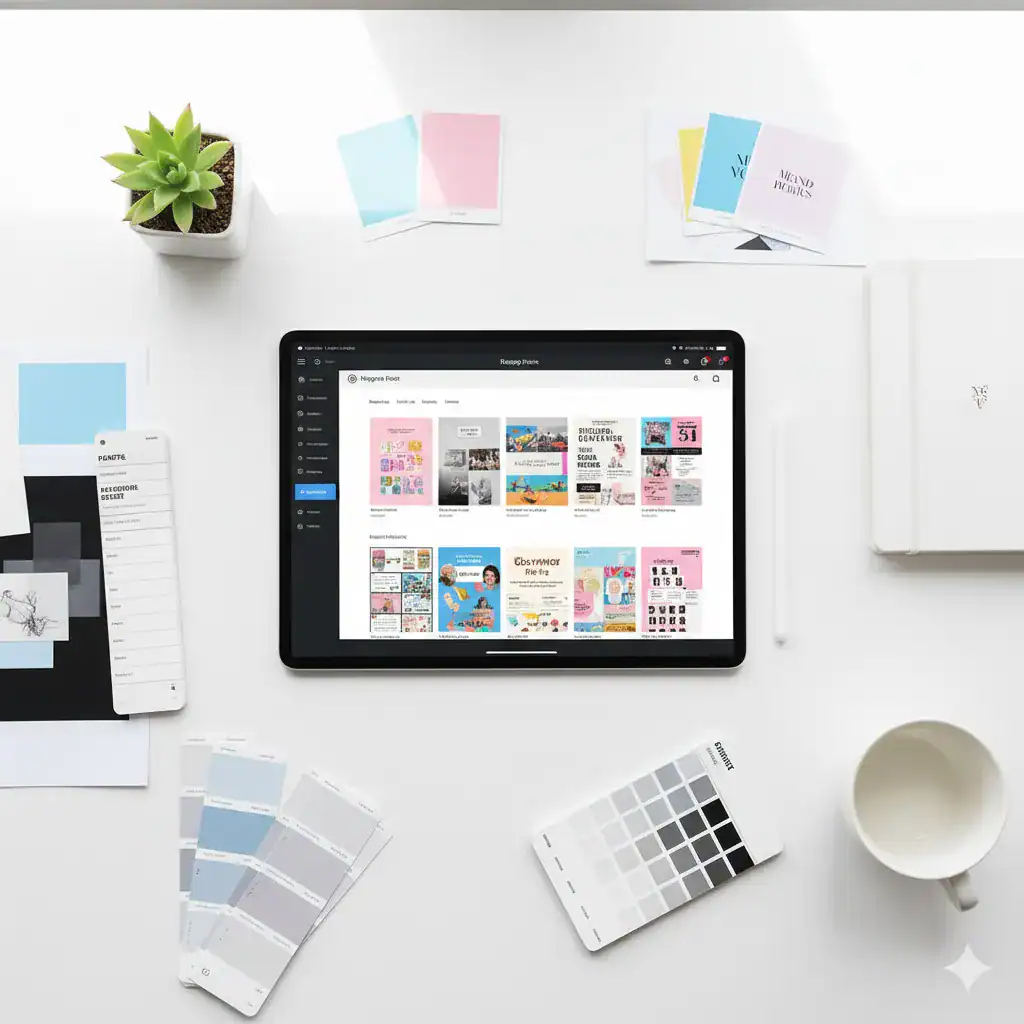
Canva Free is the rare tool where the free tier isn’t just marketing bait. You can actually get work done. And in 2026, it got even better.
What’s New in 2026
Canva had its biggest product launch ever in late 2025:
- Affinity suite now free: Canva acquired Affinity (professional photo editor, vector designer, page layout tool) and made it available to all Canva users. This is like getting Photoshop+Illustrator+InDesign alternatives for $0.
- Canva Design Model: The first AI model trained specifically for design complexity — smarter suggestions, better layouts.
- Video Clips: Text-to-video generation powered by Google Veo 3 with synchronized sound.
- 3D objects: Generate and manipulate 3D elements in your designs.
What’s Included (The Good Stuff)
Templates: 250,000+ (most are free). AI features: ~50 Magic Write uses/month, Background remover (10/month), Magic Edit. Storage: Unlimited designs (5GB for uploads). Exports: High-res downloads, no watermarks. Affinity suite: Professional design tools — no extra cost.
The Free vs Pro Reality Check
I used Canva Free exclusively for 3 months. Here’s what I couldn’t do:
- Access “Pro” templates (about 30% of templates)
- Use Brand Kit for consistent colors/fonts
- Resize designs instantly (major time-saver)
- Schedule social posts
- Remove backgrounds more than 10 times monthly
Did this kill productivity? Not really. I worked around it:
- Saved my color codes in a note
- Manually created templates for consistent sizing
- Used Remove.bg for extra background removals
- Scheduled posts through Buffer’s free tier
Time cost: Maybe 15 extra minutes per week.
Start designing with Canva Free today.
Perplexity Free: Research That Actually Finds Things
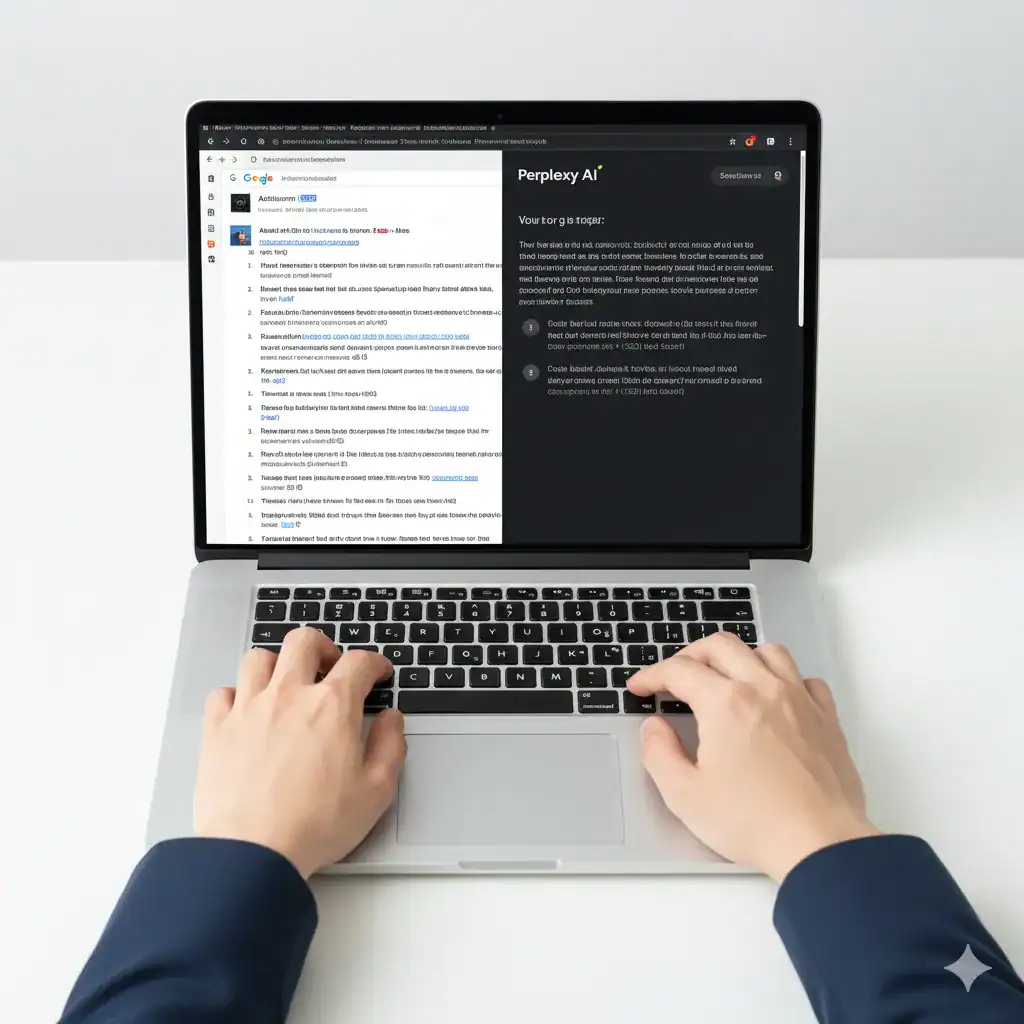
Google search is dying. Perplexity is what’s killing it. This remains one of the most useful AI tools without subscription requirements.
What Makes It Different
Instead of showing you links, Perplexity reads the sources and answers your question. With citations.
Real comparison: Question: “What’s the ROI timeline for switching to electric fleet vehicles?”
Google Search:
- Result 1: Tesla ad
- Result 2: Forbes article (paywalled)
- Result 3: Industry report from 2019
- Time to answer: 15 minutes of clicking
Perplexity:
- Immediate answer with current data
- Cited 6 recent sources
- Included calculator for my specific case
- Time to answer: 30 seconds
For everything Perplexity offers, read our complete Perplexity AI review and guide.
The Free Tier Limits (Updated)
Daily queries: 3 Pro searches (down from 5 in 2025) + 3 Deep Research queries (new). Standard searches: Unlimited. File uploads: Yes (PDFs, docs). Focus modes: Academic, Writing, Video, Social.
The trade-off: You lost 2 daily Pro searches but gained 3 Deep Research queries — which are actually more thorough and useful for complex questions. Deep Research autonomously browses multiple sources, creates a research plan, and synthesizes findings. It’s the better deal.
Try Perplexity AI for free research.
The Pro Search Strategy
You only get 3 Pro searches and 3 Deep Research queries daily, so use them strategically:
Use Deep Research for:
- Complex research questions requiring multiple sources
- Comparing products, services, or approaches
- When you need a comprehensive answer, not just a quick one
Use Pro Search for:
- Specific factual questions needing accuracy
- Recent information (last 30 days)
- Financial or medical queries where source quality matters
Use standard search for everything else. Save your premium queries for when they’ll actually make a difference.
The Reality Check: What Free Tiers Can’t Do
Let’s be honest about limitations.
Universal Free Tier Problems
1. Speed: Free users wait in line. During peak hours, expect delays that add up.
2. Priority: When servers are maxed, free users get throttled or booted.
3. Support: Your bug report goes to a queue that’s checked “eventually.”
4. Ads: ChatGPT now shows ads on free tier. Others may follow. This is the new reality of “free” AI.
5. Limits Reset: Most limits are daily/monthly, not rolling. Hit your limit at 11 PM? Wait for midnight.
The Real Cost of “Free”
Time tax: Working around free tier limits adds roughly 15-20% more time to projects.
Example project: Creating a marketing campaign with landing page
- With paid tools: 4 hours
- With free tools: 5 hours
Is it worth it? Depends on your math:
- If your time is worth $50/hour: The extra hour costs you more than paying for tools
- If you’re a student/hobbyist: That extra hour is free learning time
- New option: ChatGPT Go at $8/month might be the sweet spot — removes ads, increases limits, costs less than lunch
When You Should Just Pay
Upgrade from free when:
- You’re using a tool daily
- Hitting limits interrupts actual work
- Time saved > monthly cost
- It’s for business use (tax deductible anyway)
- Ads are genuinely disrupting your workflow
Red flag moment: If you’re constantly thinking “I wish I could…” then the free tier is costing you mental bandwidth.
The Complete Free AI Tools Comparison (2026)
| Tool | Category | Free Tier Limits | Ads? | Best For |
|---|---|---|---|---|
| ChatGPT | Writing / General | ~30 turns/hr, 3 images/day, limited GPT-5.2 | Yes | Quick writing, image gen, general tasks |
| Claude | Writing / Analysis | ~50 msgs/day, file creation, Projects | No | Complex analysis, document work, deliverables |
| Google AI Studio | Developer / API | ~25-50 req/day, 1M token context | No | Developers, batch tasks, long documents |
| GitHub Copilot | Coding | 2,000 completions/mo, 50 chats/mo | No | Part-time developers, students |
| Leonardo.AI | Image Generation | 150 tokens/day (~18-30 images) | No | Social media images, blog visuals |
| ElevenLabs | Voice / Audio | 10,000 chars/mo (~7 min audio) | No | Video voiceovers, podcast intros |
| Microsoft Copilot | General / Reasoning | Unlimited chat, Think Deeper, image creation | No | Reasoning tasks, free image gen |
| Canva | Design | 250K+ templates, 50 Magic Write/mo, Affinity | No | Social media, presentations, branding |
| Perplexity | Research | Unlimited search, 3 Pro/day, 3 Deep Research/day | No | Fact-checking, competitor research |
| Windsurf | Coding | Unlimited autocomplete, 5 agentic actions/day | No | High-volume coding, autocomplete addicts |
💡 Swipe left to see all columns →
Building Your Free AI Stack: The Complete Setup
Here’s the exact toolkit I’d use if starting from zero budget today:
The Core Stack ($0/month)
Writing: ChatGPT Free + Claude Free
- ChatGPT for quick drafts and ideas (accept the ads)
- Claude for important content, analysis, and file deliverables
- Combined limit covers ~80-100 messages daily
Coding: GitHub Copilot Free + Windsurf
- Copilot for chat-based coding help (50 messages/month)
- Windsurf for unlimited autocomplete while coding
- Together they cover 90% of coding assistance needs
Images: Leonardo.AI + ChatGPT (3/day)
- Leonardo for bulk image generation (18-30/day)
- ChatGPT for quick photorealistic images when you need instant quality
- Supplement with Bing Image Creator if needed (unlimited, lower quality)
Voice: ElevenLabs Free
- 6-7 minutes monthly
- Perfect for video intros/outros
- Upgrade only when doing regular podcasts
Design: Canva Free (+ Affinity)
- Unlimited designs, 250,000 templates
- Affinity suite for professional editing needs
- Export high-res without watermarks
Research: Perplexity Free
- 3 Pro + 3 Deep Research queries daily
- Unlimited quick lookups
- Replaces 90% of Google searches
Reasoning: Microsoft Copilot (Think Deeper)
- Free access to o1-level reasoning
- Use when you need deep logical thinking
- Bonus: free image generation
The Workflow
For a blog post with visuals and landing page:
- Research topic in Perplexity (5 min)
- Draft in ChatGPT (10 min)
- Refine/fact-check in Claude, export as Word doc (10 min)
- Generate hero image in Leonardo (2 min)
- Create social graphics in Canva (15 min)
- Generate voiceover summary in ElevenLabs (2 min)
- Build landing page with GitHub Copilot (25 min)
Total time: ~70 minutes. Total cost: $0. Output: Publication-ready content package with code.
The Supplementary Tools
When you need more capacity:
- Images: Add Bing Image Creator (unlimited, lower quality)
- Research: Add Google NotebookLM (free tier with 50 sources/notebook, audio overviews)
- No-code apps: Try Google Opal for building AI mini-apps
- Presentations: Use Kimi AI Slides for automated slide creation
- Video editing: Check CapCut Free (basic editing, some AI)
Smart Usage Patterns
Stretch your limits by:
- Batch similar tasks together
- Write better prompts instead of multiple attempts
- Use different tools for different phases (ChatGPT for drafts, Claude for polish)
- Cache good outputs for reuse
- Plan around daily limit resets
- Use the tool with the most generous limits for the task at hand
FAQs: Your Questions Answered
“Is free tier actually useful or just a trial in disguise?”
Legitimately useful for these free AI tools. I’ve used ChatGPT Free and Claude Free as my primary writing assistants for months. The limits exist, but they’re generous enough for real work. The biggest change: ChatGPT now shows ads on free tier, while Claude remains ad-free. Both are still genuinely functional.
“What happens when I hit the daily limit?”
ChatGPT: Falls back to a lighter model (still usable, plus you see ads). Claude: Blocks until limits reset. GitHub Copilot: Stops completions until next month. Leonardo: Can’t generate until tomorrow. ElevenLabs: Stops at character limit. Perplexity: Standard search still works, only Pro/Deep Research limited.
“Are there really no catches with these free tiers?”
There are catches. ChatGPT now shows ads — that’s a new catch since 2025. Your data may train their models (standard across most AI). Features disappear or limits tighten (Google cut AI Studio limits by 80% with no warning). There’s no guaranteed uptime or support. And some tools don’t allow commercial use on free tier — always check terms before delivering work to clients.
“Can I use free AI tools for client work?”
Use free AI tools for creation, but verify commercial rights before delivering to clients. ChatGPT, Claude, and Perplexity generally allow commercial use of outputs. Leonardo and ElevenLabs have specific terms worth checking. The safest approach: use free tools for drafting and ideation, finalize with tools whose commercial terms you’ve verified.
“Which one tool should I start with?”
For most people: Claude Free — it’s the most capable free tier in 2026 with file creation, Projects, and no ads. For coders: GitHub Copilot Free. For visual creators: Leonardo. For researchers: Perplexity. Pick the one that matches your primary need and expand from there.
“What about free AI coding tools?”
The free coding toolkit is surprisingly strong in 2026. GitHub Copilot Free gives you 2,000 code completions and 50 chat messages monthly across VS Code, Visual Studio, and JetBrains. Windsurf (formerly Codeium) offers unlimited autocomplete with 5 daily agentic actions. Cursor has a free tier with 2,000 completions and 50 premium requests. Combined, you can code productively without paying a cent.
“Does ChatGPT Free really show ads now?”
Yes. As of February 2026, OpenAI displays ads at the bottom of responses for free and Go tier users in the US. Ads are not shown to minors. Plus ($20/mo), Pro ($200/mo), Business, and Enterprise tiers remain ad-free. If you want the ChatGPT experience without ads but can’t justify $20/month, the Go tier at $8/month removes some limits and keeps it ad-free.
“Has Google AI Studio gotten worse?”
The limits got worse — dramatically. Our original review praised 1,500 daily free queries. Google cut that by approximately 80% in December 2025. But the models got better. You now have access to Gemini 2.5 Pro and Flash (much more capable than the Gemini 1.5 Pro from our original review) with a 1 million token context window. It’s fewer requests with a smarter model — which, depending on your use case, might actually be a net positive.
The Bottom Line
You can build a complete AI workflow for $0/month that produces professional results — and in 2026, that toolkit now includes coding assistance, file creation, and reasoning that wasn’t available when we first wrote this review. The best free AI tools 2026 aren’t bait-and-switch tactics — they’re genuinely functional versions that cover most people’s needs.
The trade-off has evolved: It’s not just time anymore. You’re now also trading attention (ads in ChatGPT), data (training models), and flexibility (tighter limits on some tools). But the core proposition holds: for hobbyists, students, freelancers, and anyone not running an AI-dependent business, free tiers deliver real value.
What I actually use: Paid versions of ChatGPT and Claude (I live in these), free GitHub Copilot (2,000 completions is enough for my coding needs), free versions of everything else (occasional use doesn’t justify subscription costs).
Start here: Pick Claude Free (best overall free tier in 2026) and one other tool matching your primary need (GitHub Copilot for coding, Leonardo for images, Canva for design, ElevenLabs for voice). Use them for a month. Upgrade only what you hit limits on repeatedly.
The AI toolkit that “doesn’t suck” isn’t about finding perfect tools. It’s about knowing exactly what each tool does well, working within its constraints, and not paying for features you’ll never use.
Stay updated on the latest free AI tools and updates in our complete AI tools guide.
Last tested: February 2026. AI tools change frequently — if a limit or feature mentioned here has changed, let me know in the comments.