
🆕 Latest Update (June 2026): The AI music world just got reshuffled by record labels. Udio turned off downloads entirely during its Universal Music settlement, Suno made downloads paid-only after its Warner deal, and ElevenLabs dropped Music v2 with section-by-section editing on May 27. This guide reflects every one of those changes, tested in June 2026.
⚡ TL;DR – The Bottom Line
What It Is: Roundup of 6 AI music generators tested head-to-head in June 2026, with the same prompts on each.
Best For: Creators, podcasters, marketers, and indie songwriters who need original music fast without a studio.
Price: Free tiers on 4 of 6; paid plans run from $5/mo (ElevenLabs Starter) to $30/mo (Suno Premier).
Our Take: Suno wins overall on vocals, usability, and the fact that you can actually download what you make.
⚠️ The Catch: Udio disabled downloads during its Universal settlement, so the best-sounding tool here is currently a stream-only preview, not a tool you can ship work with.
The Bottom Line
If you want the short version: the best AI music generators in 2026 are Suno for almost everyone, ElevenLabs Music for commercial work where licensing has to be airtight, and Google Lyria 3 if you just need free background tracks. Suno wins on vocals, usability, and the fact that you can actually download and use what you make. Udio sounds slightly better but, as of this writing, you cannot export a single track from it.
The free tiers are real and worth trying. The paid plans start around $5 to $10 a month. The one big limitation across the whole category is legal: training data is still disputed in court, so “you own it” comes with asterisks. Best for creators, podcasters, and marketers who need original music fast. Skip the hype if you are a working producer hoping to replace your DAW. For the wider creative-tool picture, our best AI image generators guide and our free AI tools roundup cover the same buyer questions in neighboring categories.
💡 Key Takeaway: If you publish commercially, ElevenLabs Music gives you the clearest license. If you mainly want music that sounds great and lives wherever you put it, Suno is the safer everyday pick. Pick the tool by where the file ends up, not which one sounds best in the browser.
📑 Quick Navigation
What AI Music Generators Actually Do
Here is the plain version. You type a sentence describing the song you want. A few seconds later you get a finished track back, complete with vocals, instruments, and a mix. No instruments, no studio, no music degree required.
Think of it like ordering coffee. You do not need to know how the espresso machine works. You say “oat milk latte, extra hot,” and someone hands you the cup. AI music tools work the same way. You say “upbeat indie folk, male vocals, acoustic guitar, song about a road trip,” and the tool hands you a song.
To see what that feels like, I ran the same five-minute test on every tool. I gave each one the identical prompt above and timed how long it took to get something I would actually use in a video. Suno handed me two full versions in about forty seconds, vocals and all. Google’s Lyria 3 inside Gemini gave me a clean thirty-second clip with auto-written lyrics. ElevenLabs Music took a bit longer but let me regenerate just the chorus without touching the verses, which is the kind of control the others still struggle with.
🔍 REALITY CHECK
Marketing Claims: “Create studio-quality music in seconds.”
Actual Experience: The first generation is rarely the keeper. Across all the tools, getting a track you genuinely like usually means three to ten attempts, tweaking the prompt each time. Suno’s v5 vocals are the closest to “studio” out of the box, but you will still burn credits hunting for the right take.
Verdict: Seconds to generate, yes. Minutes to actually land something good. Budget for the misses.
How I Tested These Tools
I judge the best AI music generators the same way every time: same prompts, same scoring, no shortcuts. Every tool got the identical workout so the comparison is fair. I tested three prompts on each: a vocal pop song with custom lyrics, an instrumental lo-fi hip-hop loop for a video background, and a cinematic orchestral cue. I judged five things: how the audio actually sounds, how realistic the vocals are, how much control you get, how clear the commercial licensing is, and how easy the whole thing is to use.
I also checked the boring-but-critical stuff: can you download the file, can you legally put it on YouTube, and what happens to your songs if the company changes its terms. In 2026, that last question turned out to matter more than audio quality. If you pair these tracks with AI voiceover, our Google AI Studio text-to-speech review covers the narration side of the same workflow.
The Best AI Music Generators 2026, Ranked
📊 Overall Editor Rating Across 6 Tools
Scored on a composite of audio quality, vocals, control, licensing clarity, and ease of use (June 2026 testing).
1. Suno: Best Overall (4.5/5)
Suno is what most people mean when they say “AI music” now. It has crossed 100 million users and 2 million paying subscribers, and in February 2026 it reported $300 million in annual revenue alongside a $400 million funding round. That scale shows up in the product.
The thing that changed everything is the vocals. Earlier versions had that robotic AI shimmer that gave the game away instantly. The v5 generation (v5.5 is the latest refinement) fixed most of it. When I fed it my pop prompt with custom lyrics, the singer breathed, slid between notes, and phrased lines the way a real vocalist would. For pop, R&B, and singer-songwriter material, nothing else on this list matches it.

You start free with 50 credits a day, roughly 10 songs. Pro is $10 a month (about $8 if you pay yearly) and unlocks 2,500 monthly credits plus commercial rights. Premier at $30 a month adds Suno Studio, an in-browser editing workspace that behaves like a simple digital audio station. One honest note: power users describe Studio as still rough, so do not upgrade for it unless you will use it weekly.
The catch arrived with Suno’s November 2025 settlement with Warner Music. Downloading audio now requires a paid account, free-tier tracks are playable and shareable but not downloadable, and paid tiers have monthly download caps. New licensed models are coming in 2026, and the current ones will be retired when they land. You can still try Suno here, but read the rights page before you build a business on it.
2. Udio: Best Audio Quality, Worst Timing (3.5/5)

On pure sound, Udio is the leader. It outputs 48kHz stereo, separates instruments cleanly, and its vocal performances capture vibrato and tone shading with unsettling realism. My instrumental and ambient prompts came back richer and more detailed on Udio than anywhere else. If audio fidelity were the only thing that mattered, this would be the winner.
It is not the only thing that matters. After Udio settled with Universal Music Group in late 2025, it disabled downloads across every plan, including for paying customers and songs people had made months earlier. It gave users a brief 48-hour grace window to rescue old tracks, then locked the doors. As of June 2026, Udio is a “walled garden”: you can generate and stream, but you cannot export.
🔍 REALITY CHECK
Marketing Claims: “The highest-fidelity AI music on the market.”
Actual Experience: True, and almost irrelevant right now. I made a gorgeous smooth-soul track on Udio and could not get it off the platform. A song you cannot download is a song you cannot put in a video, upload to Spotify, or sell.
Verdict: Wait. A new licensed Udio with downloads restored is promised for 2026. Until it ships, this is a preview, not a tool you can ship work with.
Udio’s paid plans land around $10 a month for the entry tier, comparable to Suno. The legal footing is arguably better than Suno’s, since Universal and Warner have both settled with it. But you can watch Udio’s relaunch rather than rely on it for now.
3. ElevenLabs Music: Best for Commercial Work (4/5)
ElevenLabs built its name on the best AI voices in the business, so it makes sense the company moved into music. The big news is Music v2, launched on May 27, 2026, and its headline feature is inpainting. In plain terms, that means you can highlight one section of a song, the bridge, say, and regenerate only that part without scrambling the rest. None of the other tools do this as cleanly.

Where ElevenLabs really wins is licensing clarity. For brand agencies, ad teams, and anyone whose client will ask “are we legally clear to run this,” ElevenLabs Music is built around commercially safe output. If your work touches money and lawyers, that peace of mind beats a slightly warmer vocal.
Music is bundled into standard ElevenLabs plans, which start free (7 songs a day on iOS) and scale from $5 a month on Starter up to the larger tiers. The API self-serve rate dropped to roughly $0.40 per minute of audio at launch. The honest tradeoff: for personal songs where vocal warmth matters most, Suno still sounds friendlier, and credit costs add up on heavy editing days. We dig into the full platform in our ElevenLabs review, and you can try ElevenLabs Music here.
4. Google Lyria 3 and MusicFX: Best Free Option (4/5)
If “free” is your top priority, Google is hard to beat. Lyria 3 launched inside the Gemini app in February 2026 and generates 30-second tracks with vocals, auto-written lyrics, and instrumentals from a text, image, or even video prompt. It is free for any Gemini user over 18, with higher limits for paid Google subscribers. Every track carries Google’s SynthID watermark so it can be identified as AI-made.
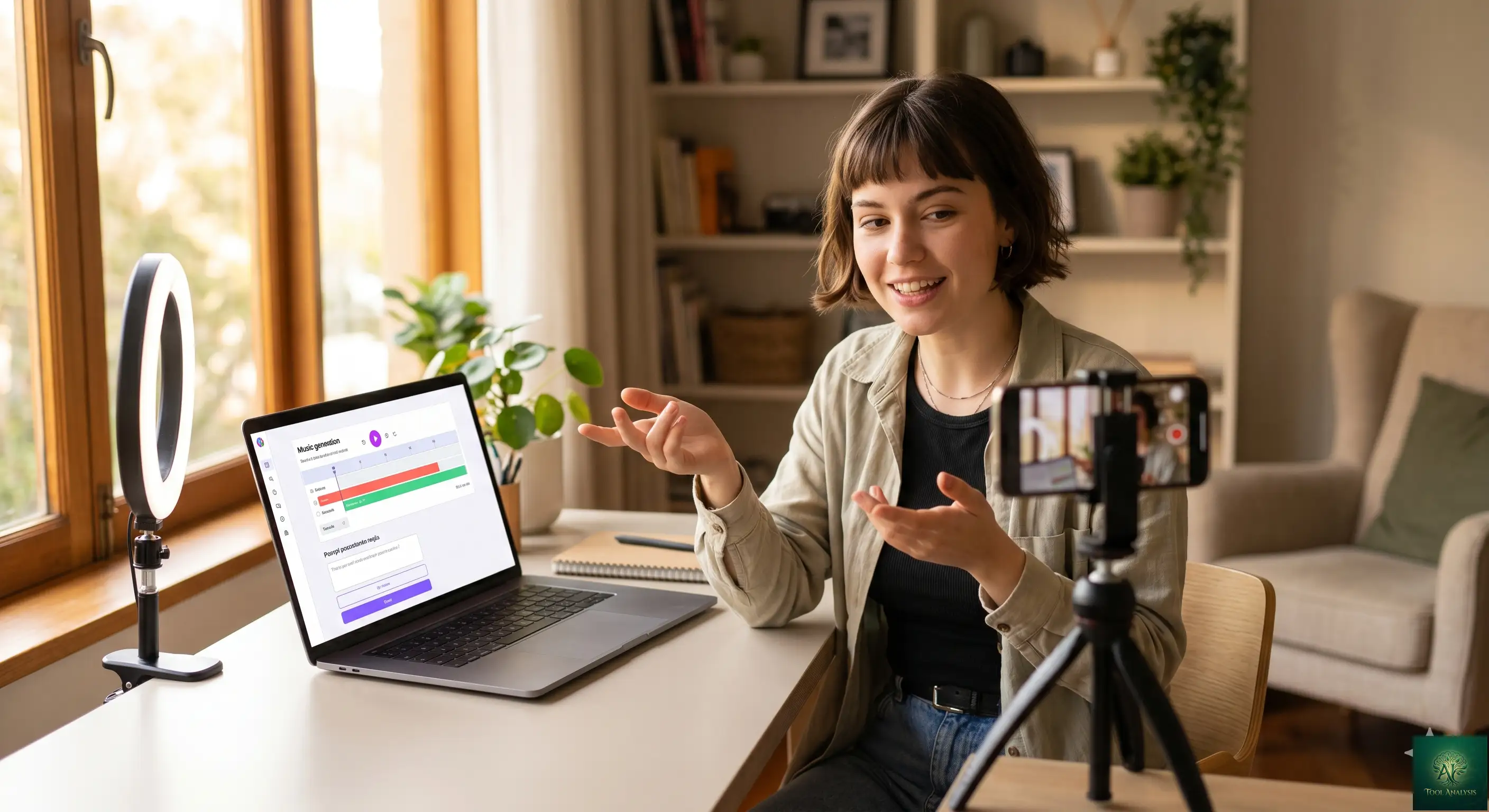
For instrumental and ambient work, Google’s MusicFX in Google Labs is a hidden gem. It generates music in real time with no caps and no paywall, letting you push faders and add prompt layers while the sound plays. It is wonderful for live-stream backgrounds and focus music, less so for finished songs.
The honest limits: the 30-second cap on Lyria 3 rules out full songs, and the SynthID watermark means everyone knows it is AI. For short-form content, Shorts, Reels, and TikTok, that is a non-issue. If you already live in Google’s world, see our Gemini review and our Google AI Studio review for how the rest of the ecosystem fits together.
5. AIVA: Best for Orchestral and Film Music (4/5)

AIVA is the specialist. While Suno and Udio chase pop and rap, AIVA was built for emotional, cinematic, orchestral music. If you score trailers, games, or short films, it is the tool that feels like collaborating with a composer rather than rolling dice on a prompt. It gives you deeper control over structure, emotion, and instrumentation.
My cinematic orchestral prompt came back more controlled and more usable on AIVA than on the generalist tools, where “epic” often means “loud.” AIVA is free with 3 downloads a month, with paid plans from around 11 euros up to roughly $49 a month for full commercial ownership. It is weaker on vocals, so do not bring it pop songs. Bring it film cues.
6. Soundraw: Best for Safe Background Tracks (3.5/5)
Soundraw does one thing and does it predictably: royalty-free background music for videos. You pick a genre and mood, it generates several instrumental options, and you customize length and structure. There are no vocals and less creative range than Suno, but that is the point. For a YouTuber who needs a clean, copyright-safe bed under a tutorial every week, predictable beats exciting.
Pricing starts around $16.99 a month. If you mostly edit video and just need music that will not trigger a copyright claim, pair it with an editor like the one in our DaVinci Resolve 20 review or a fast clip tool like Veed.io.
Pricing Breakdown: What You’ll Actually Pay
Here is every tool side by side. Note that “free” almost always means “no commercial rights,” so if you plan to publish or monetize, budget for at least the entry paid tier.
| Tool | Free Tier | Entry Paid Plan | Top Plan | Commercial Rights |
|---|---|---|---|---|
| Suno | 50 credits/day (~10 songs), no commercial use | Pro $10/mo (~$8 annual) | Premier $30/mo | On paid plans |
| Udio | Generate only, no downloads | ~$10/mo | ~$30/mo | Paid, but exports disabled now |
| ElevenLabs Music | 7 songs/day (iOS), attribution required | Starter $5/mo | Scale $330/mo | On paid plans |
| Google Lyria 3 | Free in Gemini, 30-sec tracks, SynthID | Higher limits with Google AI Plus/Pro | Google AI Ultra | Check Google terms |
| AIVA | 3 downloads/month | ~€11/mo | ~$49/mo | Full ownership on top tier |
| Soundraw | Create and preview only | ~$16.99/mo | Team plans | Yes, royalty-free |
💡 Key Takeaway: The cheapest sticker isn’t always the cheapest plan. ElevenLabs Music starts at $5/mo but credits add up fast on heavy editing days. For most creators, Suno Pro at $10/mo delivers the better cost-per-keeper-song once you account for regenerations.
Head-to-Head: Suno vs Udio vs ElevenLabs Music
These three are the best AI music generators most people are actually choosing between. Here is how they stack up on the criteria that decide real projects.
🎛️ Capability Profile: The Top 3 Compared
Suno wins usability and vocals, Udio leads on raw fidelity, ElevenLabs takes commercial and section editing.
| Criteria | Suno | Udio | ElevenLabs Music |
|---|---|---|---|
| Vocal realism | Best | Strong | Good |
| Raw audio fidelity | Very good | Best (48kHz) | Very good |
| Section editing | Limited | Limited | Best (inpainting) |
| Can you download it? | Yes (paid) | No, disabled | Yes (paid) |
| Licensing clarity | Improving | Strong (settled) | Best for commercial |
| Ease of use | Best | Good | Good |
| Community size | Largest | Smaller | Growing |
📬 Enjoying this guide?
Get honest AI creative tool reviews delivered weekly. No hype, no spam.
The Licensing Problem Nobody Wants to Talk About

This is the part the marketing pages skip. AI music tools were trained on huge amounts of music, and the record labels sued over it. Through late 2025 and into 2026, those fights split into different paths. Warner settled with Suno. Universal settled with Udio. Sony settled with neither, and its cases are expected to produce a pivotal court ruling in summer 2026 that could set the rules for the whole industry.
🔍 REALITY CHECK
Marketing Claims: “Royalty-free music you own.”
Actual Experience: A paid license from one of these tools gives you the right to use the output. It does not automatically give you copyright protection over a fully AI-generated track, and it does not erase the risk that a platform reviews or pulls it. The label deals narrow the legal risk. They do not zero it.
Verdict: Fine for most YouTube videos, social clips, and podcasts. Be careful with high-stakes commercial releases, and keep proof of your tool license.
The practical takeaway: document your human contribution, keep your subscription receipts, and use a distributor that openly accepts AI content before you spend money marketing a release.
💡 Key Takeaway: Your subscription gives you the right to use the output. It does not guarantee copyright protection or platform safety. Document the prompt, lyrics, and edits you contributed, save the license PDF, and pick a distributor that openly accepts AI tracks before you spend on marketing.
Who Should Use What
Choose Suno if you are a creator, hobbyist, or songwriter who wants the best all-around tool that actually lets you download and use your music. It is the safe default for most people.
Choose ElevenLabs Music if you do brand or agency work, run ads, or need to tell a client the audio is commercially clean. The inpainting editing is a bonus.
Choose Google Lyria 3 or MusicFX if you want free background music for short-form video and you do not need full-length songs or hidden AI origins.
Choose AIVA if you score films, games, or trailers and need orchestral, cinematic control. Choose Soundraw if you want predictable, copyright-safe instrumental beds for videos every week.
Wait on Udio if downloads matter to you, which for most people, they do. Revisit it when the licensed relaunch restores exports.
What Creators Are Actually Saying
On Reddit’s music and AI communities, the conversation about the best AI music generators follows a consistent pattern. Udio gets the nod for raw audio quality, while Suno gets credit for better usability, a far more active community, and vocals that, since v5, actually sound human. One long-time user testing both daily summed it up: Suno is more creative and more catchy, but that creativity also means more “hallucinations,” so you generate more takes to find a keeper.
The loudest complaints in 2026 were not about audio at all. They were about Udio’s sudden download lockout, which sparked genuine user anger and even threats of legal action, and about Suno’s shift to download caps and revised ownership language after the Warner deal. The lesson creators keep repeating: download and back up anything you care about, because the terms can change overnight.
FAQs: Your Questions Answered
Q: What is the best AI music generator overall in 2026?
A: Suno. It combines the most natural vocals, the easiest workflow, the biggest community, and the ability to actually download and use what you create. ElevenLabs Music is the better pick specifically for commercial and agency work.
Q: Is there a good free AI music generator?
A: Yes. Google Lyria 3 inside Gemini is free for 30-second tracks, and Google’s MusicFX is free with no caps for real-time instrumental music. Suno’s free tier gives you about 10 songs a day, but those are for personal use only and downloads now require a paid plan.
Q: Can I use AI-generated music commercially on YouTube?
A: Generally yes, if you are on a paid plan that grants commercial rights. Free-tier tracks usually cannot be monetized. For high-stakes releases, the legal picture is still unsettled, so keep your license records and lean toward tools with clearer commercial terms like ElevenLabs Music.
Q: Why can’t I download my songs from Udio?
A: Udio disabled downloads across all plans during its settlement with Universal Music Group in late 2025. It is operating as a stream-only “walled garden” while a new licensed version is built. A relaunch with downloads restored is planned for 2026.
Q: Do I own the music I create with these tools?
A: A paid license gives you the right to use the output, but fully AI-generated work may not qualify for traditional copyright protection, and ownership language has been shifting. Treat “you own it” as “you can use it,” not as ironclad legal protection.
Q: Which tool has the best vocals?
A: Suno, since the v5 model. It produces natural vibrato, breath, and phrasing that mostly clears the old robotic-AI feel, especially on pop and R&B. Udio is close, and some users prefer it on certain genres.
Q: What’s the best AI music generator for instrumental and background tracks?
A: Soundraw for predictable, royalty-safe video beds, Google MusicFX for free real-time instrumentals, and AIVA for cinematic or orchestral cues. Udio sounds best on instrumentals but you cannot download from it right now.
Q: How does AI music compare to hiring a musician or buying stock music?
A: For speed and cost, it is no contest. A single stock-music license often costs more than a month of Suno Pro, and a custom track from a musician costs far more. For emotional nuance and originality on a flagship project, a human still wins. Most creators use AI for the bulk of their needs and reserve human work for the moments that matter most.
Final Verdict

After testing all six, the best AI music generators for 2026 sort cleanly by what you need. Suno is the overall winner at 4.5 out of 5: it sounds the most human, it is the easiest to use, and it actually lets you walk away with your songs. ElevenLabs Music takes the commercial crown at 4 out of 5 thanks to clean licensing and section editing. Google Lyria 3 is the best free option, AIVA owns the orchestral niche, and Soundraw is the dependable workhorse for video backgrounds.
Udio is the heartbreaker. It makes the best-sounding music here and you cannot do anything with it until the relaunch ships. Watch it, do not depend on it.
The one rule that applies to all of them: the technology is moving faster than the law, so download what you make, keep your receipts, and read the rights page before you bet a project on any single tool. Start free with Suno or ElevenLabs Music today and run your own five-minute test.
Founder of AI Tool Analysis. Reads every pricing page, help article and footnote so you don’t have to. Covering AI tools since 2025. More about our testing →
Stay Ahead of the AI Music Curve
The AI music landscape is being rewritten by record-label settlements every few weeks. Subscribe for weekly reviews of AI music, voice, and creative tools — with honest testing, not press releases.
- ✅ Sourced Reviews: Every price and limit checked against the vendor’s own pages, not rewritten from press releases
- ✅ License Tracking: Know the moment a label deal changes what you can download
- ✅ Feature Launches: Major updates like ElevenLabs Music v2 covered within days
- ✅ Comparison Updates: As Suno, Udio, and ElevenLabs evolve, we update our verdicts
- ✅ No Hype: Just the AI news that actually matters for your creative work
Free, unsubscribe anytime.
Want AI insights? Sign up for the AI Tool Analysis weekly briefing.
Newsletter

Related Reading
- ElevenLabs Review 2026: Music, Agents, and Voice Tested
- Best AI Image Generators 2026: Is There One Clear Winner?
- Google AI Studio Text to Speech Review 2026
- Fish Audio Review 2026: The ElevenLabs Killer?
- DaVinci Resolve 20 Review: Free AI Video Editing
- The Complete AI Tools Guide: 200+ Tools Tested and Ranked
Last Updated: June 6, 2026
Tools Covered: Suno v5.5, Udio (June 2026 build), ElevenLabs Music v2, Google Lyria 3 (Gemini), AIVA, Soundraw
Next Review Update: July 6, 2026 (label deals and Udio relaunch are moving fast)
Have a tool you want us to review? Suggest it here | Questions? Contact us