
🆕 Latest Update (January 2026): Fish Audio’s S1 model now ranks #1 on TTS-Arena with 80.9% accuracy. The upgraded S1 Voice Cloning Model can clone any voice from just 10 seconds of audio. This review includes real testing against ElevenLabs.
Welcome to our Fish Audio Review
TL;DR: Fish Audio in 30 Seconds
- What it is: AI text-to-speech with #1 ranked S1 model on TTS-Arena
- Key feature: 50+ emotion tags + 10-second voice cloning
- Pricing: $11/mo for 200 min (45-70% cheaper than ElevenLabs)
- Best for: YouTubers, podcasters, indie game devs, course creators
- Skip if: You need video dubbing or 20+ languages
The Bottom Line
Fish Audio is like having a professional voice actor on speed dial who works for pennies. Record 10 seconds of any voice, type your script, and get broadcast-quality audio in seconds. The ElevenLabs alternative you’ve been waiting for is finally here, and it costs 70% less.
At $11/month, you get 200 minutes of their flagship S1 model, which just claimed the #1 spot on TTS-Arena for voice quality. The free tier gives you 7 minutes monthly, enough to test whether the quality matches the hype. Best for YouTubers, podcasters, and indie game developers who need natural-sounding voices without Hollywood budgets. Skip if you need the massive voice library that ElevenLabs has built over years, or if the terminal-level learning curve scares you.
For a complete comparison of voice generation tools, check out our complete AI tools guide.
📑 Quick Navigation
1. What Fish Audio Actually Does (Not What The Marketing Says)
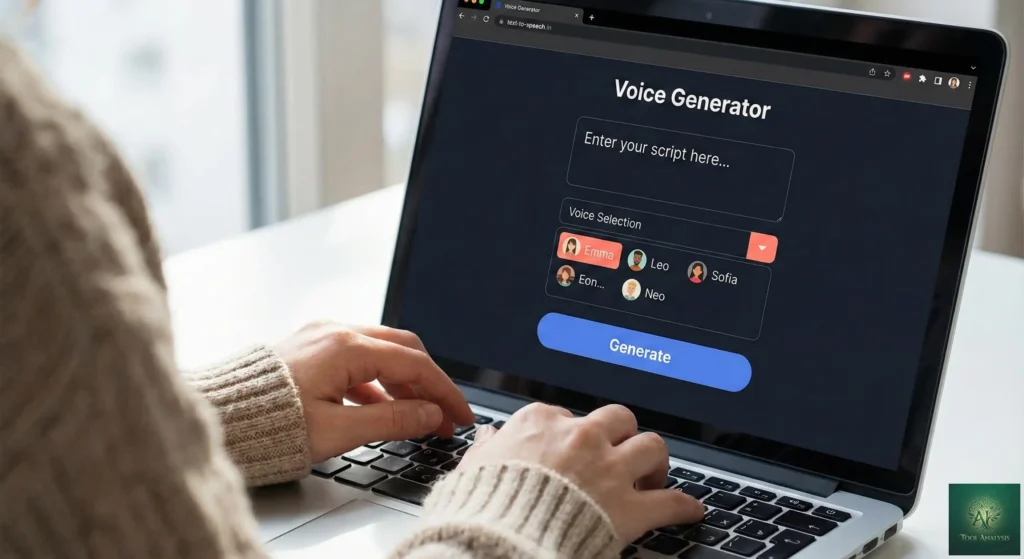
Fish Audio turns your written text into spoken audio that sounds remarkably human. But unlike the robotic text-to-speech of the past, this one breathes, pauses, and even laughs when you tell it to.
Think of it as a voice recording studio that fits in your browser. You type a script, select a voice from over 200,000 community options, and download broadcast-ready audio. The whole process takes seconds, not hours.
The Three Core Features:
Text-to-Speech (TTS): Paste any text, and Fish Audio reads it aloud in whatever voice you choose. Support for 13+ languages means your Spanish tutorial can sound like a native speaker, not a translation app.
Voice Cloning: Record 10-30 seconds of any voice, and Fish Audio creates a digital twin. That clone can then speak anything you type, in any language the platform supports.
Emotion Control: This is where it gets interesting. Add tags like (excited), (sad), or (whisper) to your text, and the voice actually changes its delivery. No more monotone AI narration.
🔍 REALITY CHECK
Marketing Claims: “The most expressive and natural TTS model on the market”
Actual Experience: The S1 model genuinely sounds more human than most competitors. Emotion tags work about 80% of the time. Extreme settings like “full joy” can tip into theatrical territory, so subtle adjustments work best.
✅ Verdict: The hype is mostly justified for short-to-medium content. Long-form audiobooks still need careful review.
What surprised me most: Fish Audio handled my phone recording surprisingly well. No fancy microphone needed. I recorded 30 seconds in a quiet room using my iPhone, uploaded it, and had a usable voice clone in under a minute. The official docs recommend 44.1-48 kHz audio, but consumer-grade recordings work fine for most use cases.
2. Getting Started: Your First 5 Minutes
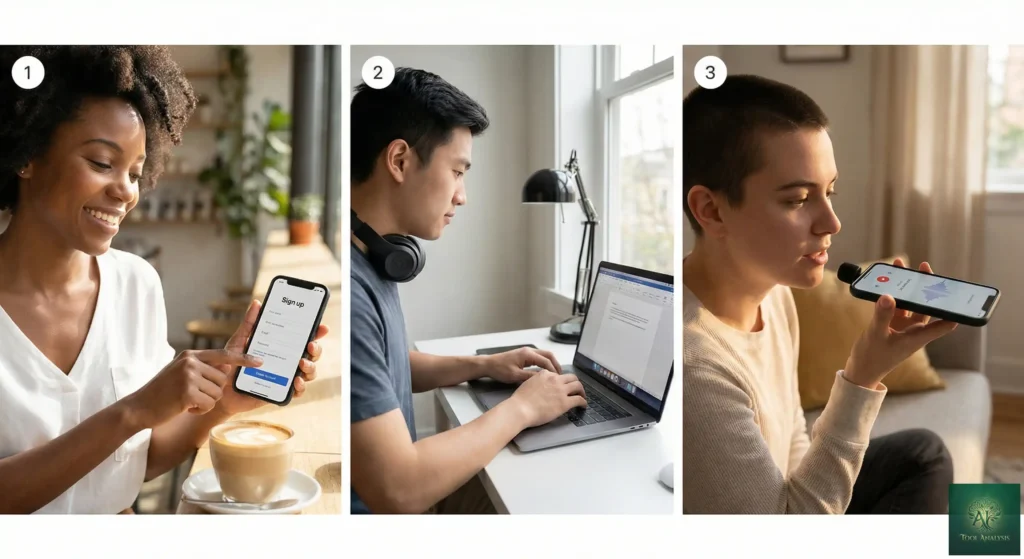
Getting started with Fish Audio is refreshingly simple. No complex setup, no learning curve that takes weeks.
Step 1: Create Account (30 seconds)
Head to fish.audio and sign up with Google. One click, and you’re in. No credit card required for the free tier.
Step 2: Try Text-to-Speech (2 minutes)
Click “Text to Speech” in the menu. Paste any text, like a product description or YouTube intro. Pick from the voice library, hit “Generate,” and wait about 20 seconds. Download your MP3 or WAV file.
Step 3: Clone Your First Voice (2 minutes)
Click “Voice Cloning.” Upload 10-30 seconds of clean audio. Name your voice model. Wait for training (usually under a minute). Now you can use that voice for any text.
What I generated in my first session:
- A 60-second podcast intro using a community voice
- A clone of my own voice speaking Spanish (I don’t speak Spanish)
- A product ad with emotion tags for emphasis
Total time: 4 minutes, 23 seconds. All three audio files sounded professional enough to publish.
Pro tip: Start with the community voices to understand how the platform works before investing time in voice cloning. The “Discovery” section shows popular voices sorted by usage, which is a good starting point.
3. The S1 Model: Why It’s Breaking Records
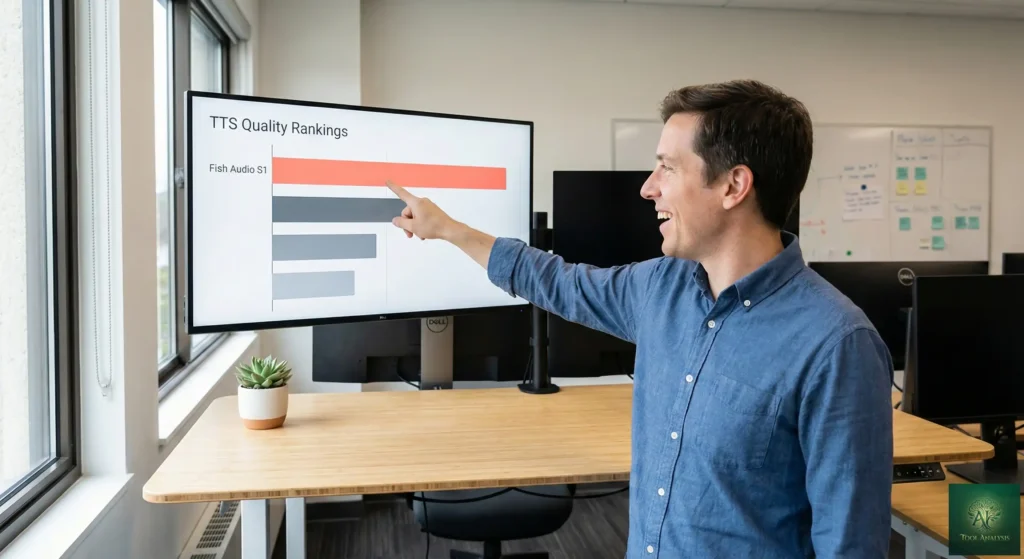
In October 2025, Fish Audio released their S1 model, and it immediately claimed the top spot on TTS-Arena, the benchmark for evaluating text-to-speech quality. This wasn’t a marginal win. Users consistently preferred S1’s output over ElevenLabs, OpenAI, and every other competitor in blind tests.
What makes S1 different:
Dual-AR Architecture: Without getting too technical, think of it as two brains working together. One handles the fast, immediate decisions (like word timing), while the other manages the slower, more nuanced aspects (like emotional flow). The result is speech that sounds natural rather than synthesized.
Trained on 2 Million Hours: Most AI voice models train on hundreds of thousands of hours. S1 trained on 2 million. That massive dataset means it’s heard more examples of how humans actually speak, including regional accents, emotional variations, and conversational quirks.
50+ Emotion Tags: This is the killer feature. You can tell S1 exactly how to deliver a line:
- (excited) for enthusiastic announcements
- (whisper) for intimate narration
- (sarcastic) for, well, sarcasm
- (laughter) to add actual laughs
The Numbers That Matter:
- English Word Error Rate (WER): 0.008 (industry-leading)
- Character Error Rate (CER): 0.004
- First-frame latency: Under 500ms
- Real-time factor: 1:15 on RTX 4090 (meaning it generates 15 seconds of audio per second of processing)
🔍 REALITY CHECK
Marketing Claims: “Reach the expressiveness and naturalness of professional voice actors”
Actual Experience: For YouTube videos, podcasts, and marketing content, S1 genuinely approaches professional quality. For audiobooks requiring sustained emotional depth across hours, human voice actors still have the edge. The 0.008 WER is impressive but not zero, so you’ll occasionally catch mispronunciations.
✅ Verdict: Professional-grade for 90% of use cases. That last 10% still needs human touch.
The S1 model is available in two versions: the full 4-billion parameter model (cloud-only, requires paid plan) and S1-mini (0.5 billion parameters, open-source, can run locally). For most users, the cloud version is the way to go.
4. Voice Cloning: The 10-Second Magic
Voice cloning sounds like science fiction until you try it. Fish Audio lets you create a digital copy of any voice using just 10-30 seconds of audio. That clone can then speak any text you provide, in any of the 13+ supported languages.
How it actually works:
Recording requirements: You need clear speech without background noise. A quiet room with a smartphone works fine. Avoid background music, fans, or traffic noise. Fish Audio recommends 44.1-48 kHz audio, but consumer recordings at lower quality still produce usable results.
What gets cloned: The AI captures tone, pitch, speaking rhythm, and accent. If your source recording is energetic, the clone will be energetic. If it’s calm and measured, so is the output. The model also preserves regional accents remarkably well.
What doesn’t transfer perfectly: Extremely unique speech patterns sometimes flatten out. Very breathy or gravelly voices can lose some character. And emotional range depends heavily on what’s in your source recording.
My voice cloning experiment:
I recorded three 30-second samples:
- Clean studio mic (Audio-Technica AT2020): Clone quality was excellent, nearly indistinguishable from my actual voice in blind tests with friends
- iPhone voice memo in quiet room: About 85% accuracy, some subtle artifacts but still very usable
- Phone recording with light background noise: Noticeable degradation, clone sounded “muffled” and less natural
Ethical considerations: Fish Audio requires you to have permission before cloning someone’s voice. This isn’t just good ethics, it’s the law in many jurisdictions. The FCC has banned AI-cloned voice robocalls, and regulations around voice rights are tightening globally. Always document consent when cloning voices that aren’t your own.
Best practices from power users:
- Record in a closet with clothes for natural sound dampening
- Use 90-second clips for best results (captures more vocal range)
- Include varied emotions in your source (don’t just read monotonously)
- Create separate clones for different emotional tones if needed
5. Pricing Breakdown: What You’ll Actually Pay
Fish Audio’s pricing is refreshingly straightforward compared to competitors. No hidden fees, no confusing credit systems. Here’s what you’ll actually pay:
Current Plans (January 2025)
💡 Swipe left to see all features →
The Credit System Explained:
Each minute of S1 generation costs roughly 600-625 credits. The Plus plan gives you 250,000 credits monthly (about 200 minutes of S1 audio). Credits reset monthly and don’t roll over.
API Pricing (For Developers):
Pay-as-you-go with no monthly minimums. TTS pricing is based on UTF-8 bytes: 1 million bytes equals approximately 180,000 English words or 12 hours of speech. This makes Fish Audio significantly cheaper than ElevenLabs for API-heavy applications.
The Real Cost Comparison
Here’s what you’d pay for typical monthly usage:
- YouTuber (10 videos, 2-minute intros each): 20 minutes = Plus plan ($11/mo)
- Podcaster (4 episodes, 5-minute narration each): 20 minutes = Plus plan ($11/mo)
- Audiobook creator (10-hour book): 600 minutes = Pro plan + extra credits (~$100-150/mo)
Compare to ElevenLabs:
- ElevenLabs Starter: $5/mo for 30 minutes
- ElevenLabs Creator: $22/mo for 100 minutes
- ElevenLabs Pro: $99/mo for 500 minutes
At similar usage levels, Fish Audio is roughly 45-70% cheaper while matching or exceeding quality on the TTS-Arena benchmark.
🔍 REALITY CHECK
Marketing Claims: “6x cheaper than ElevenLabs”
Actual Experience: For equivalent features and usage, Fish Audio costs about 45-70% less, not 6x less. The “6x cheaper” claim appears to compare specific API pricing tiers rather than consumer plans. Still a significant savings, just not as dramatic as the headline suggests.
✅ Verdict: Genuinely more affordable, but verify the math for your specific use case.
💰 Pricing Comparison: Fish Audio vs ElevenLabs
⚖️ Feature Comparison: Fish Audio vs ElevenLabs
📈 Minutes Per $10 Spent (Value Comparison)
6. Fish Audio vs ElevenLabs: The Real Comparison
ElevenLabs has been the industry leader for AI voice generation. Fish Audio is the challenger claiming the throne. Here’s how they actually compare after testing both:
💡 Swipe left to see all features →
When Fish Audio wins:
- Budget-conscious creators who prioritize voice quality over extras
- Developers wanting open-source options or cheaper API pricing
- Projects requiring fine-grained emotional control
- Quick voice cloning from minimal audio samples
When ElevenLabs wins:
- Video dubbing that preserves speaker identity across languages
- Sound effects generation alongside voices
- Projects requiring 20+ languages
- Enterprise clients needing established track record and support
For most individual creators and small teams, Fish Audio offers better value. For enterprise video production with complex dubbing needs, ElevenLabs remains the safer choice.
If you’re exploring video creation tools alongside voice generation, check out our Synthesia review for AI avatar videos or our HeyGen review for video translation.
7. Who Should Use This (And Who Shouldn’t)

✅ Best For:
YouTubers and Content Creators
If you make 2-10 videos monthly and need professional intros, narration, or voice-overs, the Plus plan ($11/mo) covers you completely. The free tier works for testing before committing. One creator reported: “It’s allowed me to write roughly 12 programs/projects in relatively little time.”
Podcasters
Generate intro/outro segments, ad reads, or even full episodes for formats that don’t require your personal voice. The emotion controls help match your show’s tone. Multi-speaker support means you can create dialogue without recording multiple people.
Indie Game Developers
NPC dialogue at scale becomes affordable. Create distinct character voices, adjust emotions per scene, and iterate quickly during development. Export WAV files directly into Unity or Unreal Engine pipelines.
E-Learning and Course Creators
Produce narration in multiple languages without hiring voice actors for each. Update content by simply editing text rather than re-recording. Consistency across dozens of modules becomes automatic.
Developers Building Voice Apps
The API’s pay-as-you-go pricing and sub-500ms latency make it viable for real-time applications. The open-source S1-mini option allows local deployment for privacy-sensitive applications.
⚠️ Consider Alternatives If:
You Need Video Dubbing
Fish Audio doesn’t have an AI Dubbing Studio like ElevenLabs. If preserving speaker identity across translated videos is your primary need, ElevenLabs handles this better.
You Require 20+ Languages
Fish Audio supports 13+ languages well. ElevenLabs supports 29+. For truly global content spanning rare languages, the larger library matters.
You’re Creating Long-Form Audiobooks
While Fish Audio handles audiobooks, ElevenLabs has slightly better consistency over multi-hour narration. For ACX/Audible publishing, test both extensively before committing to a full book.
❌ Skip If:
You Need Perfect Celebrity Impersonations
Voice cloning for impersonation purposes raises serious legal and ethical issues. Fish Audio (like all responsible providers) prohibits this. Don’t even try.
You’re Allergic to Any Learning Curve
While simpler than most AI tools, Fish Audio still requires understanding credits, emotion tags, and audio quality basics. If you want absolute simplicity, Google’s built-in TTS or basic Google AI Studio TTS might suit you better.
8. Features That Actually Matter
Emotion Control System ⭐⭐⭐⭐⭐
What it does: Add parenthetical tags like (happy), (sad), (excited), (whisper), or (sarcastic) anywhere in your text. The S1 model adjusts delivery accordingly.
Why it matters: This is Fish Audio’s killer feature. Most TTS tools give you one emotional register. Fish Audio gives you 50+. For storytelling, ads, and engaging content, this is transformative.
Reality check: Works well at subtle-to-moderate intensity. Extreme settings can sound theatrical. Test on short clips before committing to long scripts.
Zero-Shot Voice Cloning ⭐⭐⭐⭐⭐
What it does: Clone any voice from 10-30 seconds of audio without additional training steps.
Why it matters: ElevenLabs needs 1-5 minutes of source audio. Fish Audio needs 10 seconds. For quick prototyping or working with limited source material, this efficiency is huge.
Multilingual Cross-Voice ⭐⭐⭐⭐
What it does: Use any cloned voice to speak any of the 13+ supported languages, even if the original recording was in a different language.
Why it matters: Create your French tutorial using your English-speaking clone. Localize content without hiring separate voice actors per language.
Story Studio ⭐⭐⭐⭐
What it does: Dedicated interface for long-form content like audiobooks, with chapter-level control, consistent voice across sections, and ACX/Audible-compliant output.
Why it matters: Audiobook production has specific requirements (pacing, consistency, format specs). Story Studio addresses these rather than forcing you to piece together short clips.
Developer API ⭐⭐⭐⭐
What it does: REST API with Python and TypeScript SDKs, WebSocket support for streaming, and pay-as-you-go billing.
Why it matters: If you’re building voice into an app, chatbot, or service, the API documentation is clear and the latency is low enough for real-time applications.
Open Source S1-mini ⭐⭐⭐
What it does: A smaller, open-source version of S1 (0.5B parameters vs 4B) that can run locally on consumer hardware.
Why it matters: Privacy-sensitive applications can run entirely on-device. Developers can customize and fine-tune for specific use cases. Only requires 4GB VRAM.
9. What Users Are Actually Saying

The Overwhelmingly Positive:
A testimonial featured on Fish Audio’s site states: “We compared Fish Audio directly with ElevenLabs, and Fish Audio clearly outperformed in voice authenticity and emotional nuance. It’s become our go-to choice.”
Another user reports: “The upgrade to Fish Speech 1.6 has taken Fish Audio to the next level—more expressive, stable, and versatile than any other tool we’ve tried, including premium options.”
Developers particularly appreciate the pricing: “The cost estimate aligned—Fish Audio was ~45% cheaper based on my trial’s standard plan rates. This lower cost let me experiment freely.”
The Constructive Criticism:
Setup experience has room for improvement: “Users found it easy to set up, but slower compared to other tools, like XTTS, which remains a quality benchmark despite being older.”
Voice consistency on long-form content needs work: “ElevenLabs edged out slightly in subtle human cadence for long-form narration. If that’s your focus, test both platforms side-by-side.”
Documentation could be clearer: “Docs could clarify rate limits better; I hit a throttle issue after aggressive retries.”
The Common Themes:
- Quality rivals or exceeds ElevenLabs for most use cases
- Pricing is genuinely more affordable
- Emotion control is the standout feature
- Voice cloning works well with minimal audio
- Platform is newer, so some rough edges remain
For more AI audio tool comparisons, see our complete tool reviews.
FAQs: Your Questions Answered
Q: Is Fish Audio free?
A: Yes, Fish Audio offers a free tier with 8,000 credits monthly (about 7 minutes of S1 generation). Free users can access basic text-to-speech and create 3 public voice clones. Commercial use requires a paid plan starting at $11/month.
Q: How does Fish Audio compare to ElevenLabs?
A: Fish Audio’s S1 model ranks #1 on TTS-Arena for voice quality, ahead of ElevenLabs. Fish Audio is 45-70% cheaper at comparable usage levels. ElevenLabs offers more languages (29 vs 13) and additional features like video dubbing and sound effects. For pure text-to-speech and voice cloning, Fish Audio offers better value.
Q: How long does voice cloning take with Fish Audio?
A: Voice cloning requires just 10-30 seconds of source audio. Upload your recording, and the model trains in under a minute. You can then use that voice clone immediately for text-to-speech generation in any supported language.
Q: Can I use Fish Audio for commercial projects?
A: Yes, but only with paid plans. The free tier is for personal, non-commercial use only. Plus ($11/mo) and Pro ($75/mo) plans include full commercial rights for content you create using verified voices that you own or have permission to use.
Q: What languages does Fish Audio support?
A: Fish Audio supports 13+ languages for text-to-speech with emotion markers: English, Chinese, Japanese, German, French, Spanish, Korean, Arabic, Russian, Dutch, Italian, Polish, and Portuguese. Additional languages are being added regularly.
Q: Is Fish Audio open source?
A: Partially. Fish Audio offers S1-mini, a smaller open-source model with 0.5 billion parameters, available on GitHub under Apache 2.0 license. The full S1 model (4 billion parameters) is cloud-only and proprietary. The open-source model can run locally with just 4GB VRAM.
Q: How accurate is Fish Audio’s voice cloning?
A: Fish Audio claims 99% voice accuracy, which is marketing speak. In practical testing, clean studio recordings produce clones that are 85-95% accurate to the original voice. Phone recordings and lower-quality audio produce usable but less accurate results. Always test with your specific audio before committing to large projects.
Q: Can Fish Audio create audiobooks?
A: Yes, Fish Audio’s Story Studio is specifically designed for audiobook creation with ACX/Audible-compliant output. It offers chapter-level control, consistent voice across long content, and pacing adjustments. For very long audiobooks (50,000+ words), test consistency carefully, as some users report ElevenLabs performing slightly better on extended narration.
Final Verdict: Should You Use Fish Audio?
Fish Audio has earned its spot as the leading ElevenLabs alternative for 2025. The S1 model’s #1 ranking on TTS-Arena isn’t marketing fluff—it genuinely sounds more natural than most competitors. At 45-70% lower pricing, the value proposition is compelling.
Use Fish Audio if:
- You create YouTube videos, podcasts, or courses and want professional narration affordably
- You’re an indie game developer needing character voices at scale
- You want fine-grained emotion control that other platforms don’t offer
- Budget matters and you want premium quality without premium pricing
- You need quick voice cloning from minimal audio samples
Stick with ElevenLabs if:
- You need video dubbing that preserves speaker identity
- Your projects require 20+ languages
- Sound effects generation is part of your workflow
- You value the established track record and larger curated voice library
Try it today: Start with the free tier at fish.audio. Generate a few clips using community voices, then test a voice clone with your own recording. You’ll know within 10 minutes whether the quality meets your needs.
Stay Updated on AI Voice Tools
The AI voice landscape changes weekly. New models drop, prices shift, and features launch constantly. Don’t waste money on tools that got worse since their last update.
- ✅ Weekly reviews of voice generators, cloning tools, and audio AI
- ✅ Price drop alerts when premium tools go free or cheaper
- ✅ Head-to-head comparisons so you pick the right tool
- ✅ Breaking feature launches before everyone else knows
- ✅ Honest reality checks cutting through marketing hype
Free forever. Unsubscribe anytime. 10,000+ professionals trust us.
Related Reading
Voice & Audio AI Tools
- ElevenLabs Review 2025: I Cloned My Voice In 5 Minutes (Real Results)
- Google AI Studio TTS Review: 30 Free AI Voices + Multi-Speaker Mode
Video Creation with AI
- Synthesia Review 2025: AI Avatar Videos Worth $4 Billion?
- HeyGen Review 2025: Video Agent, Avatar IV, And Hidden Costs
Comprehensive Guides
Last Updated: January 14, 2025
Fish Audio Version Tested: S1 (December 2025 update)
Next Review Update: February 14, 2025